Good morning, and welcome to The Ship Show!
The first real signs of fall are finally here: cooler mornings, changing leaves, a little crispness in the air.
And, right on schedule, every office in America is about three days away from sounding like a tuberculosis ward.
It dips below 60 for approximately five minutes and suddenly half the population reverts to being a Victorian-era child.
A little breeze? Perfect. Shut down the sinuses.
There’s enough congestion going around to make breathing through both nostrils feel less like a basic bodily function and more like a luxury.
I’m not immune to this. Quite the opposite, unfortunately.
My throat feels like I spent the weekend screaming into the void, which, as a Tennessee Titans fan, is less a metaphor and more a recurring Sunday activity with very little evidence that anyone on the other end can hear me.
Still, this is about as good as the weather gets around here, so we might as well enjoy it before it starts getting dark at 5:12 p.m.
– Greyson Harris
In this week’s issue:

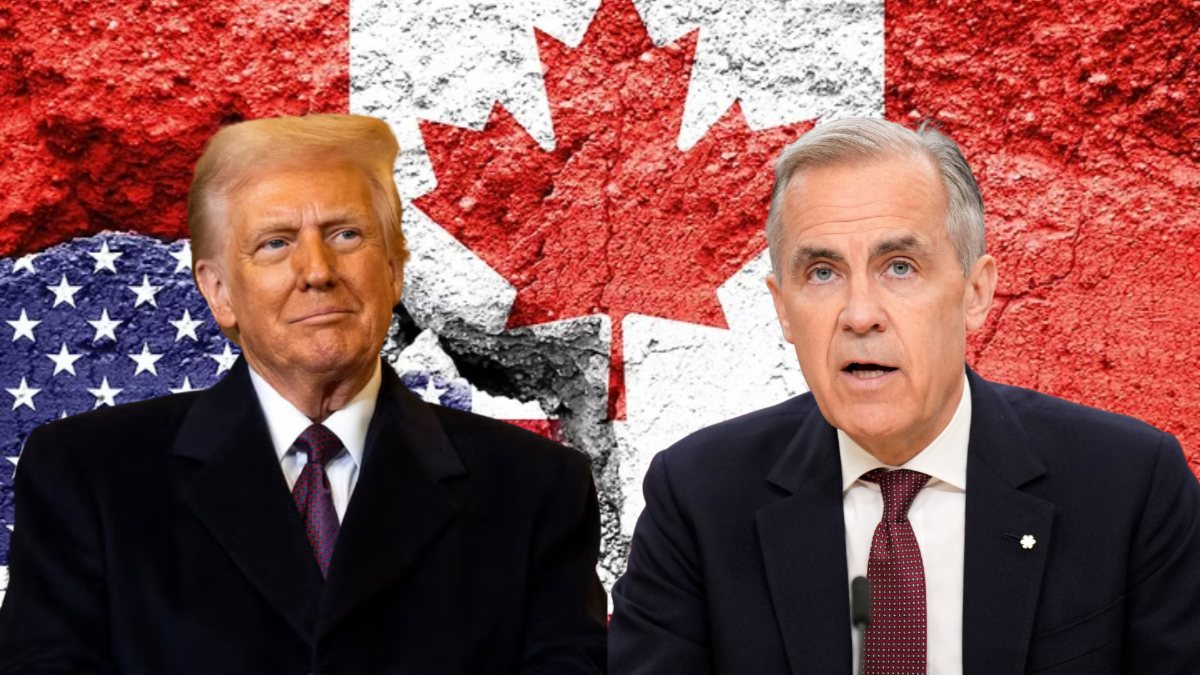
The U.S. and Canada spent decades building supply chains around the assumption that their relationship was boring and dependable.
It is currently neither.
Boy, that escalated quickly.
The latest escalation arrived September 8, when Canada imposed retaliatory tariffs on roughly $20 billion worth of U.S. goods following a new round of 50% U.S. tariffs.
The Trump administration responded by announcing that certain Canadian dairy products, alcoholic beverages, and motorcycles will be barred from entering the U.S. beginning September 29 unless the dispute is resolved.
A few numbers help explain why separating these economies is easier said than done:
Canada has considerably more at stake because of the sheer size difference between the two economies and its longstanding dependence on the American market, but after decades of integration, the U.S. has some exposure of its own.
Canada looks across the pond.
Like a scorned lover planning to leave their spouse, Prime Minister Mark Carney has responded by pushing Canada to become less economically dependent on the United States, and Europe is getting much of the attention.
Carney traveled to Europe this month as the EU floated the possibility of creating an unprecedented “associate member” relationship with Canada. Exactly what that means remains fuzzy because – and this is more than a minor detail – no such membership category currently exists.
But the conversations are very real. Canada and the EU are discussing deeper cooperation in areas including:
Canada also isn’t limiting its wandering eye to Europe. Trade negotiations with the Philippines and ASEAN are now more than 90% complete, with Canada targeting agreements later this year as it looks for more customers in Southeast Asia.
The best offense is a good defense.
The diversification effort is also showing up in defense procurement, where the invoices contain significantly more zeroes.
In July, Canada selected Germany’s Thyssenkrupp Marine Systems as the preferred supplier for a new fleet of up to 12 submarines. Negotiations are underway, with the first four expected to arrive in 2034.
It’s difficult to imagine a more literal example of shopping overseas.
That doesn’t mean Canada is abandoning its U.S. defense relationship, but major defense contracts create manufacturing relationships, supplier networks, maintenance requirements, and industrial investment that can last for decades.
Once those connections move elsewhere, they’re considerably harder to bring back.

If 2026 has taught us anything, it’s that every aisle of the grocery store is capable of generating a gastrointestinal mess on a nationwide scale.
Food recalls have been nearly impossible to avoid this year, but despite the steady stream of alarming headlines, the number of recalls itself doesn’t necessarily mean America’s food supply has suddenly become more dangerous.
The recall paradox.
Food safety experts say part of the reason recalls feel more common is fairly simple: we’ve gotten much better at finding problems.
Digital tracing systems can follow specific batches through sprawling supply chains, while genetic testing can link pathogens found in sick patients back to individual farms and processing facilities.
In other words, problems that may have once remained disconnected can now be pieced together much faster.
And yet, the actual recall numbers are down. Through August 18, FDA data showed:
A separate September study from the Illinois Institute of Technology found that recall activity does not necessarily move in step with foodborne illness.
A recall can mean the system caught contaminated food before anybody ate it. The much more important question is what happens when it doesn’t.
Down with the sickness.
If you measure 2026 by illnesses instead of recall notices, things get much less reassuring.
The Cyclospora outbreak linked to Taylor Farms iceberg lettuce became one of the largest foodborne illness outbreaks in recent U.S. history. By the time the CDC closed its investigation on September 11:
That outbreak arrived alongside hundreds of Salmonella cases linked to jalapeños and dozens of E. coli and Salmonella illnesses tied to alfalfa sprouts.
Out of sight, out of mind.
Detection technology has improved. The harder part is making sure regulators have enough people and resources to respond when those systems find something.
A February Government Accountability Office report found that FDA staffing challenges have reduced the agency’s capacity to conduct inspections even as its regulatory responsibilities have continued to expand.
Foreign inspections remain particularly strained:
Inspectors have also reportedly had to handle more of their own travel arrangements after cuts to support staff, including booking flights, arranging visas, and dealing with a reimbursement backlog exceeding $1 million.
Put all of that together, and the issue becomes less about whether Americans are seeing more recall notifications and more about whether the agencies responsible for catching dangerous food have enough capacity to keep up.
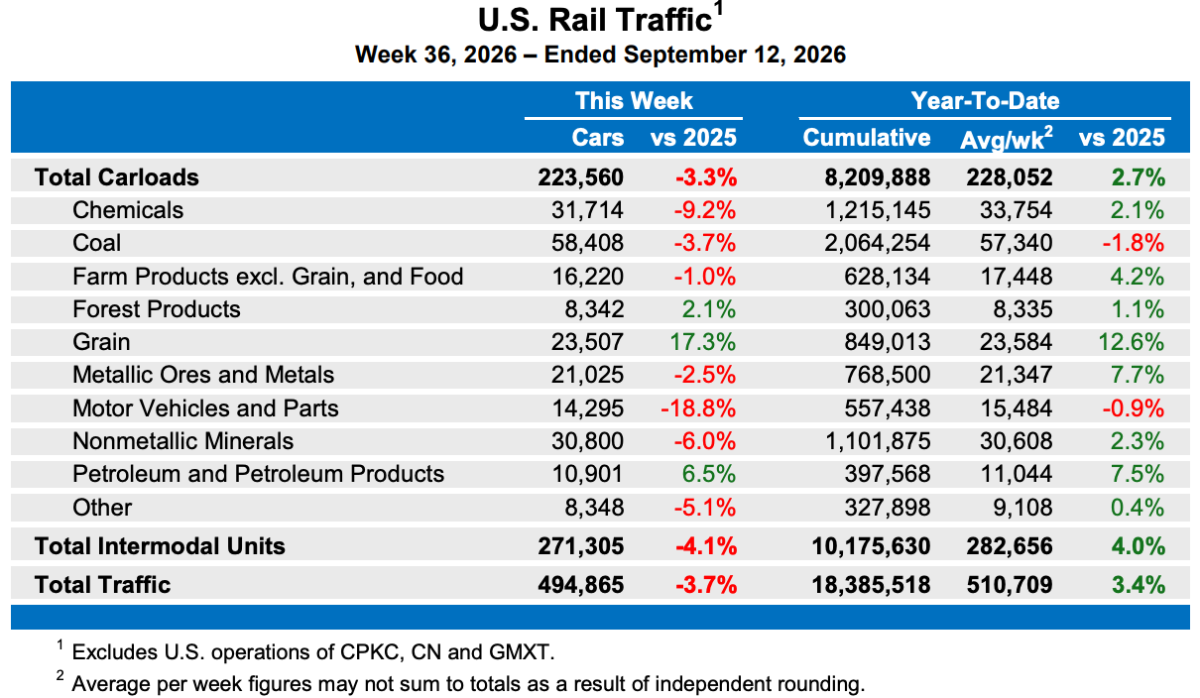
🚂 U.S. rail traffic slips for the week: U.S. railroads moved 494,865 carloads and intermodal units for the week ending Sept. 12, down 3.7% year over year. Carloads fell 3.3%, while intermodal volume declined 4.1%. Grain was the strongest commodity group, up 17.3%. Motor vehicles and parts dropped 18.8%. Despite the lower week, year-to-date U.S. rail traffic is still up 3.4%.
🚢 Asia-U.S. ocean rates surge toward pandemic highs: Far East-to-U.S. West Coast spot rates reached $7,960 per FEU on Sept. 17, while East Coast rates climbed to $11,259. Both lanes are up more than 320% since late February. East Coast pricing now sits just 11.2% below its all-time high, with West Coast rates 17.9% below their record.
✈️ Airfreight rates strengthen ahead of peak season: The Baltic Air Freight Index rose 0.9% last week and now sits 20.9% above last year. Jet fuel prices are also up 116.5% year over year, adding more upward pressure to rates as peak season approaches.
⛽️ Diesel sets another record high: The DOE/EIA benchmark diesel price jumped 24.4 cents to $6.529 per gallon, marking its ninth increase in 11 weeks and another all-time high. Since July 6, the price has surged $1.951 per gallon from $4.578.
College sports has spent the last few years changing faster than anyone can write the rules, but that hasn’t stopped Congress from taking their best shot.
Yesterday, the Senate voted 70-21 to advance the latest version of the Protect College Sports Act, which aims to create federal rules governing athlete compensation, transfers, eligibility, conference realignment, health protections, and more.
If it becomes law, it would reshape much of the system college sports has spent the NIL era improvising.
Thousands of athletes, one rulebook.
At its core, the bill attempts to replace the current mashup of NCAA regulations, state NIL laws, court rulings, and settlement agreements with national standards.
Among the biggest changes:
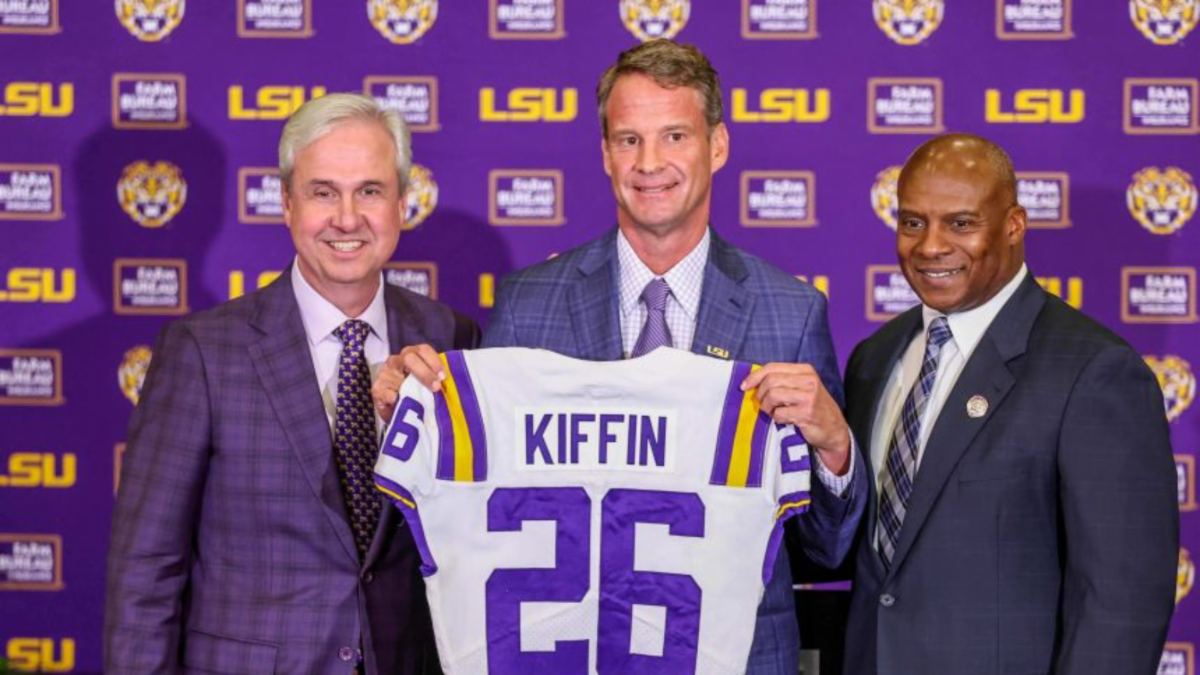
There’s also a rule limiting certain coaches who leave during the season from immediately doing the same job at another school, a provision that’s totally not based entirely on Lane Kiffin.
Basically, college sports would finally get a single rulebook, which feels ambitious for an industry that still can’t agree on what targeting is.
Realignment gets a redo.
The bill also tries to tackle the conference-realignment arms race.
Large conferences would face restrictions on further consolidation, including a 19-school limit under certain circumstances.
A school attempting to jump directly between Power Four conferences could also face a temporary waiting period, while outside investors would be prevented from simply assembling major programs into a privately controlled super league.
There are provisions aimed at protecting traditional rivalries, too, because we have officially reached the point where conference realignment became so nonsensical that the federal government is considering intervening to make sure neighboring colleges occasionally play football against each other.
Stanford joining the Atlantic Coast Conference may have been a warning.
The case for guardrails.
Supporters argue that college athletics has reached a point where rules are difficult to enforce because nearly every restriction invites another lawsuit or conflicts with another state’s law.
The NCAA has aggressively backed the bill, arguing that national standards would replace the current patchwork and allow common rules on eligibility, transfers, NIL, and recruiting to actually stick. The legislation is also supported by dozens of conferences and hundreds of schools.
There’s also a financial argument, because there always is.
A report released this month by Sen. Maria Cantwell, one of the bill’s Democratic sponsors, found that 94% of Division I athletic departments spend more than they generate, while general-fund support for Power Four athletics has risen sharply over the past decade.
Supporters see the antitrust protections as part of that stability. If Congress creates one national set of rules only for those rules to immediately become the subject of another round of litigation, college sports winds up right back where it started.
The argument is basically that college sports needs boundaries around the new system before the richest programs simply continue adding zeroes until everyone else runs out of them.
The case against guardrails (or at least the current proposed ones).
Critics aren’t arguing there isn’t unchecked chaos. There clearly is.
Their concern is about who gains power once Congress settles it.
The bill gives the NCAA, conferences, and schools targeted antitrust protection when enforcing certain rules on compensation, NIL, eligibility, and other areas. That matters because antitrust lawsuits have been one of the main forces dismantling the NCAA’s old restrictions and opening the door to NIL payments and direct revenue sharing in the first place.
Groups including the AFL-CIO argue that Congress would essentially allow the institutions running college sports to set major terms for athletes without requiring those rules to be collectively bargained with them.
The hard revenue-sharing cap is a good example of the disagreement.
Supporters see a cap as necessary to keep an already-expensive system from becoming an unlimited bidding war. Critics see Congress placing a ceiling on athlete compensation while universities remain free to spend enormous sums elsewhere.
Both sides frame their position as protecting athletes. They just have fundamentally different ideas about what those protections should look like.

We’re now posting freight on the Trusted Freight Exchange (TFX), a secure, Highway-powered network made for verified carriers like you.
It’s built right into Highway, free to use, and designed to connect you with quality freight fast.
Every KCH load on TFX is:
With TFX, you skip the back-and-forth and get straight to hauling.

The U.S. has 23 million truck parking spots. You should be able to find one without feeling like you’re on a wild goose chase.
We’re teaming up with Truck Parking Club to make that happen.
Use code KCH25 for $25 off your next reservation.
Less wandering. More rest.
Designed for shippers who want straightforward market insight and smarter freight strategies.