
Good morning, and welcome to The Ship Show!
Today marks 100 days until Christmas, which is technically true but emotionally fraudulent.
You could be excused for not feeling particularly holly and/or jolly right now, because nothing about this weather suggests that Christmas is anywhere within shouting distance.
In fact, September currently feels less like the beginning of fall and more like July forgot something and came back.
Seriously, how is it hotter now than it was in July?
There’s something deeply confusing about watching college football while the heat index is actively discouraging outdoor activity.
I know how this goes. One random morning in October, the temperature will finally drop 25 degrees overnight, everyone will declare that fall has arrived, and we’ll collectively forget how personally offended we were by September.
But in the meantime, stay inside, drink plenty of water, and enjoy the last few weeks of daylight before the clocks change and we all start driving home from work in the dark.
– Greyson Harris
In this week’s issue:


For the past few years, the basic strategy for navigating the Red Sea has been pretty straightforward: don’t.
But the economics of that detour are getting harder to swallow.
Maersk, Hapag-Lloyd, MSC, and other major carriers are steadily moving container services back through the Red Sea and Suez Canal, shortening Asia-Europe voyages and returning badly needed vessel capacity to the market.
There is, however, a fairly significant wrinkle.
At almost the exact moment carriers are returning, Yemen’s Iran-backed Houthis have captured additional territory and strategic islands around the Bab el-Mandeb Strait, the narrow southern gateway every ship must pass through to reach the Red Sea and Suez Canal.
I know a shortcut.
Maersk and Hapag-Lloyd announced this week that four more services in their shared Gemini network will return to the Red Sea and Suez Canal, continuing a gradual restoration that began earlier this year.
And they’re not alone.
Sea-Intelligence estimates that more than one-quarter of Asia-Europe container capacity will transit the Red Sea in September, with the comeback particularly noticeable on Asia-Mediterranean routes. Roughly 35% of westbound capacity on that trade is expected to use Suez this month.
That is still nowhere near the pre-crisis norm. Xeneta estimates average weekly capacity through the Bab el-Mandeb was about 213,000 TEUs in August, compared with more than 930,000 TEUs in August 2023.
There’s an obvious reason carriers are tempted.
Going around the Cape of Good Hope can add roughly one to two weeks to Asia-Europe supply chains. Returning to Suez shortens voyages, reduces fuel consumption, frees up ships, and effectively puts more container capacity back into the market without anyone having to build another vessel.
Violent real estate acquisition.
Here’s where things get uncomfortable for carriers hoping to return to their beloved shortcut.
The Houthis recently made their largest territorial gains in years along Yemen’s Red Sea coast, capturing the port of Mokha and strategic islands around the Bab el-Mandeb Strait, including Perim and the Hanish Islands.
Bab el-Mandeb is basically the front door to Suez from the south. Control of territory around the strait gives the group a stronger position near one of the most important shipping lanes on Earth.
And while the Houthis have said their current blockade is aimed at Saudi-linked vessels, their previous campaign demonstrated that commercial shipping throughout the region can quickly become collateral damage.
Pick your poison.
The Red Sea crisis is now colliding with turmoil around the Strait of Hormuz, the narrow waterway connecting the Persian Gulf to the Arabian Sea.
Traffic through Hormuz has collapsed amid the broader Iran conflict. Reuters reported that only four commodity vessels passed through the strait Monday, compared with a prewar average of roughly 125 per day.
That made Saudi Arabia’s East-West Pipeline increasingly important. The pipeline allows Saudi crude to travel across the country to the Red Sea port of Yanbu, bypassing Hormuz altogether.
Then drones damaged that pipeline.
Saudi Arabia temporarily shut the system after the attack, threatening one of its most important alternatives to Hormuz at the same time the Houthis were tightening their position around the Red Sea.
So the region now has problems at both ends.
Oil trying to avoid Hormuz increasingly depends on Red Sea infrastructure, while ships trying to use the Red Sea must pass territory where Houthi military influence is expanding.
That’s what scholars call a “pickle.”
No risk, no reward.
So why even bother going back through the Red Sea? Because going around Africa is expensive, and it’s only getting worse.
Freightos says bunker fuel prices have climbed back toward June levels and are running roughly 60% above prewar prices amid the turmoil around Hormuz. That makes every extra mile around the Cape hurt a little more.
Carriers are also battling congestion at major Asian and European ports. Taking the shorter Suez route allows ships to complete rotations faster, recover schedules, and free vessels that would otherwise remain tied up on longer voyages.
That additional capacity is already starting to show up in prices.
Asia-North Europe spot rates recently fell to roughly $4,300 per FEU, while Asia-Mediterranean rates have fallen even more sharply as additional Red Sea capacity has returned. Xeneta reported North Europe rates around $4,333 per FEU as of Sept. 10.
The larger supply chain gamble.
If the return continues, the impact could extend well beyond Asia-Europe shipping.
Sea-Intelligence has modeled a scenario in which a full return to Suez by the end of 2026 could reduce global headhaul TEU-mile demand by 8.7% in the first half of 2027, even if the actual number of containers being shipped continues to grow.
That doesn’t mean cargo disappears. It means each container travels fewer miles, so the world suddenly needs fewer ships to move it. That could put significant downward pressure on ocean rates.
Of course, there is another possibility.
Carriers return to Suez, the security situation deteriorates, and everybody turns around and heads back toward Africa.
That would once again soak up capacity, scramble schedules, increase fuel consumption, and potentially send freight rates higher.
Which leaves the shipping industry with a remarkably simple choice between longer and expensive or shorter and considerably more missile-adjacent.
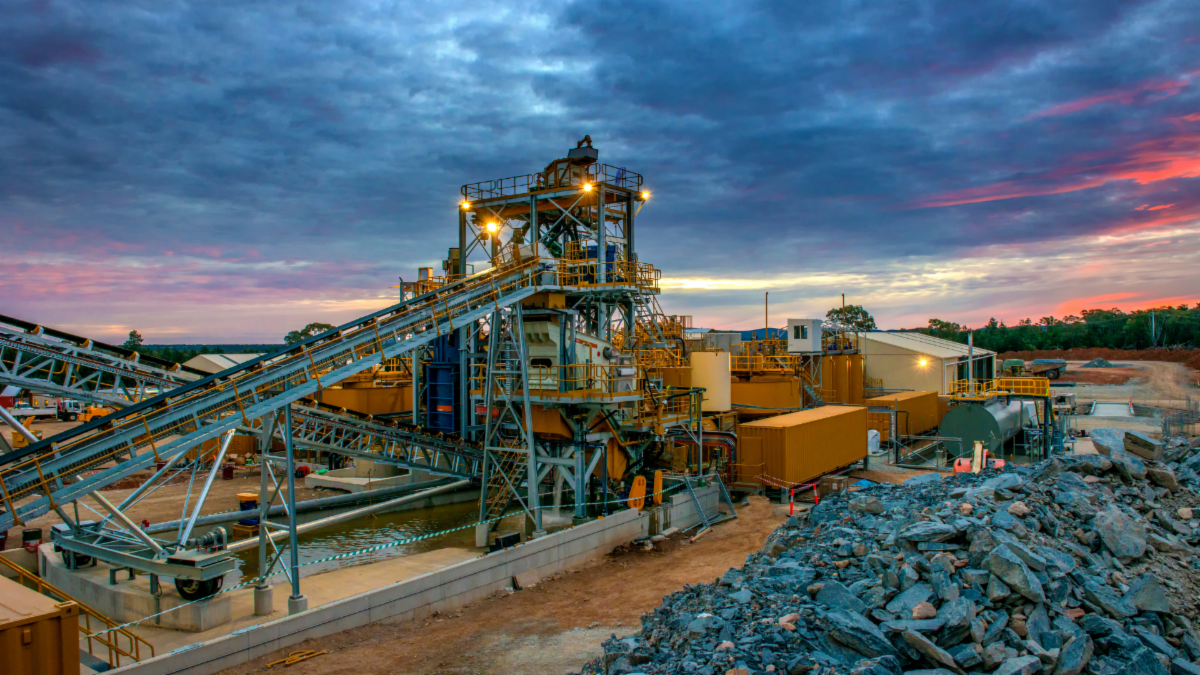
Modern civilization requires a surprising amount of very specific dirt.
Rare earth elements are buried inside everything from smartphones and electric vehicles to wind turbines, fighter jets, missiles, robots, and medical equipment.
They’re not necessarily rare in the traditional sense, but extracting, separating, refining, and turning them into useful materials is complicated, expensive, and occasionally less than ideal for the surrounding patch of Earth.
And right now, one country has an enormous head start.
China by a billion.
China controls roughly 91% of global rare earth refining, while producing more than 70% of the world’s rare earth metals.
Even if every announced project outside China comes online, the IEA estimates China could still control 70% to 73% of refining capacity by 2035.
The U.S. would very much like to change that.
Hand in the dirt.
The United States isn’t starting from zero. It accounts for roughly 12% of global rare earth mining.
California’s Mountain Pass mine, operated by MP Materials, contains one of the richest rare earth deposits in the world and currently produces more than 10% of global rare earth supply.
But mining is only the beginning.
Once rare earth ore comes out of the ground, it has to be separated, refined into high-purity materials, converted into metals and alloys, and eventually manufactured into things like permanent magnets.
The U.S. has just 1% of worldwide refining capacity, compared with China’s 91%. I’m not math major, but that seems like a large gap.
The problem is that China spent decades getting very, very good at turning those rare earths into the materials that modern industry actually needs, while the U.S. mostly got out of the business.
Back in my day.
Mountain Pass was once the dominant rare earth operation in the world. The U.S. Geological Survey notes that the United States was essentially self-sufficient in rare earths before Chinese production became dominant in the 1990s.
But Mountain Pass ran into a combination of falling prices, competition from China, regulatory issues, and environmental problems.
A wastewater pipeline associated with the facility experienced repeated problems, and rare earth separation operations were eventually shut down. The EPA has also documented hazardous-waste issues associated with the site’s previous operator.
Mountain Pass eventually changed hands several times before MP Materials acquired the operation in 2017 and began rebuilding it.
And this time, the goal is bigger than simply pulling minerals out of the ground.
Getting the band back together.
MP Materials has been working to rebuild the parts of the supply chain the U.S. lost along the way.
That includes expanding refining and separation capabilities at Mountain Pass and producing rare earth metals and magnets at a facility in Fort Worth, Texas.
Other projects are underway across the country as companies try to add more domestic mining, processing, and manufacturing capacity.
But rebuilding an entire industrial ecosystem is a slightly larger project than reopening one mine.
Small ingredient, big impact.
The urgency comes from how rare earths fit into modern supply chains.
They may account for a relatively small portion of the cost of a car, aircraft, or electronic device, but remove the right material and production can stop altogether.
That leaves industries like defense, aerospace, automotive, and electronics particularly exposed. Even temporary restrictions can create headaches because there simply aren’t many alternative suppliers capable of filling the gap at scale.
That gives China significant leverage over industries that depend on materials it mines, refines, or processes. It also explains why rare earths have become a much bigger part of the conversation around supply chain resilience.
The goal isn’t necessarily to remove China from the equation entirely. It’s to avoid having one country control quite so many of the buttons.
Which brings us to the slightly uncomfortable part.
A lot of the technologies meant to power a cleaner, more advanced future still require us to pull tremendous amounts of material out of the planet first.
Personally, my preferred mining strategy would be to leave as much of Earth’s crust exactly where Earth put it.
Unfortunately, smartphones, electric vehicles, data centers, wind turbines, fighter jets, and basically the rest of modern civilization have rejected my proposal.
So, for the foreseeable future, building a less China-dependent supply chain is going to require America to get a little more comfortable getting its hands dirty.
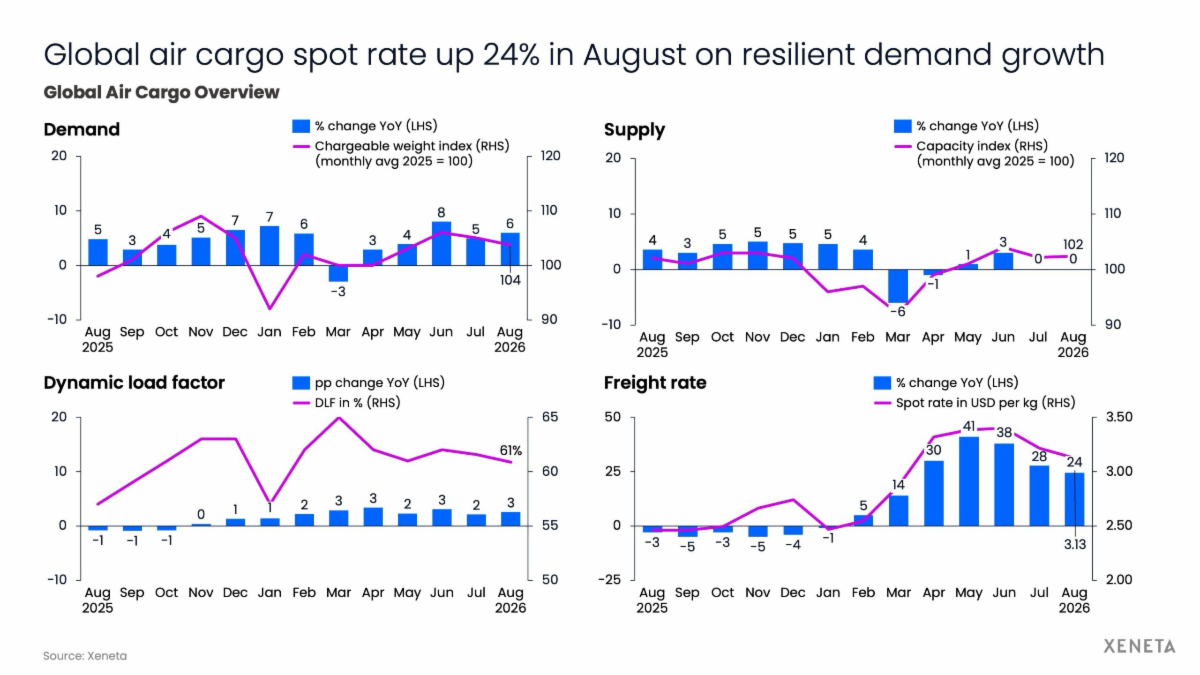
✈️ Air cargo demand stays hot while rates cool slowly: Global air cargo volumes rose 6% year over year in August, while average spot rates remained 24% higher at $3.13 per kg. Rate growth slowed for a third straight month, and spot prices fell 3% from July, but demand is still outpacing capacity. Xeneta expects rates to keep easing, though likely not as quickly as shippers would like, with the market still favoring sellers.
🚂 U.S. rail traffic starts September with a surge: Total volume reached 533,545 carloads and intermodal units for the week ending Sept. 5, up 13.8% year over year. Carloads increased 8.9%, while intermodal volume jumped 18%, with nine of 10 commodity groups posting gains. Through the first 35 weeks of 2026, combined U.S. rail traffic is up 3.6% from last year.
🚢 U.S. port imports stay elevated as peak season stretches into fall: U.S. ports handled 2.3 million TEUs in July, up 3.2% from June but down 3.9% year over year. September is now projected to be the busiest month of 2026 at 2.31 million TEUs, pushing the peak season later than expected after retailers initially rushed freight in ahead of potential tariff increases. Full-year import volume is forecast at 25.7 million TEUs, up about 1% from 2025.
⛽️ Diesel prices hit a record high: The DOE/EIA national average jumped 31.8 cents this week to $6.285 per gallon, the highest level ever recorded by the agency. Diesel has now climbed $1.707 per gallon since the beginning of July, when the average stood at $4.578. The latest price also tops AAA’s previous record of $5.82 per gallon, set in June 2022 following Russia’s invasion of Ukraine.
🚚 Truckload rates climb as freight volumes finally turn positive: Cass’ truckload linehaul index rose 11.3% year over year in August, its largest increase since June 2022. It was also the 20th straight month of annual gains. Freight shipments increased 2.1% year over year, marking the first positive reading after 42 consecutive months of declines. Cass expects freight growth to continue, though at a modest pace.

There are certain questions humanity has spent centuries trying to answer:
And then there are questions like:
Thankfully, science has room for both.
The 2026 Ig Nobel Prizes were announced this week, honoring research that “first makes people laugh and then makes them think.”
Since 1991, the awards have celebrated legitimate scientific work that just happens to sound completely ridiculous when you explain it to another human being.
This year did not disappoint.
No splash zone.
Let’s begin with perhaps the most immediately useful advancement.
The physics prize went to researchers who developed a new urinal designed to dramatically reduce splashback.
Somewhere, at some point, actual scientists had to look at existing urinal technology and say, “We can do better.”
And they did.
Through experiments and computer modeling, the team found that urine behaves much better when it strikes a surface at an angle of about 30 degrees. Their solution was a curved urinal inspired by a nautilus shell, appropriately nicknamed the Nauti-loo.
In testing, the design produced essentially no splashback. Traditional urinals, meanwhile, generated as much as 50 times more.
Some people cure diseases. Some people finally address the conditions inside an airport bathroom.
Both serve society.
No step on snek.
The biology prize went to researchers studying what makes venomous pit vipers more likely to bite humans.
There are probably several ways you could investigate this. These scientists chose stepping on them.
Researchers staged encounters with 75 venomous snakes, repeatedly stepping near them and on different parts of their bodies while wearing protective boots.
The study found that snakes were more likely to bite during warmer conditions, younger females tended to be more defensive, and stepping on a snake’s head was, unsurprisingly, a particularly effective way to make it angry.
Science has once again confirmed something your common sense was desperately trying to tell you.
Got milk?
The chemistry prize went to researchers who studied milk produced by the Pacific beetle cockroach, one of the rare cockroach species that gives birth to live young and feeds its developing embryos a nutrient-rich liquid.
The researchers discovered that the milk crystallizes inside the embryos and packs more than three times the energy of an equivalent amount of cow’s milk.
Before anyone starts clearing shelf space next to the oat milk, extracting it currently involves harvesting microscopic crystals from cockroach embryos, so you’re better off sticking with 2% for now.
Reduce, reuse, recycle mosquitoes.
For the technology prize, researchers found a productive use for one of nature’s least popular inventions.
They turned the proboscis of a female mosquito into an ultra-precise 3D-printing nozzle.
The device, dubbed a “3D necroprinter,” was capable of printing at resolutions between 18 and 22 microns, about twice as small as printers using the tiniest commercially available metal dispensing tips.
Researchers say the technology could eventually help manufacture microscopic electronics or structures used for growing living cells.
Underwear under the Earth.
And finally, the soil science prize went to researchers who recruited people across more than 25 countries to bury 1,000 pairs of cotton underwear.
The experiment was designed to measure soil health by tracking how quickly organisms in the ground decomposed the fabric.
Participants buried pairs for either 30 or 60 days before digging them back up and mailing what remained to researchers.
Imagine explaining that package at the post office.
Gardens produced the fastest decomposition, while lawns showed the least biological activity. Researchers concluded that their aptly named “underpants index” could provide meaningful information about soil health comparable to more traditional testing methods.
Laugh first, think later.
That’s what makes the Ig Nobels so fun. Behind every absurd headline is an actual scientific problem.
The work sounds silly until suddenly it doesn’t.
Which is exactly the point.
Good news: we can finally stop talking about explosive diarrhea on a nationwide scale.
The CDC says the largest known cyclosporiasis outbreak in U.S. history is officially over after nearly four months and 12,883 laboratory-confirmed cases across 21 states.
Across all reported cyclosporiasis outbreaks this year, nearly 19,600 cases have been recorded in 49 states and Washington, D.C., including more than 1,000 hospitalizations and two deaths.
Lettuce get you caught up.
Cyclosporiasis is caused by the parasite Cyclospora cayetanensis and is generally contracted through contaminated food or water.
Symptoms can include diarrhea, nausea, vomiting, and other gastrointestinal issues, though the illness can become more serious for people with weakened immune systems or underlying conditions.
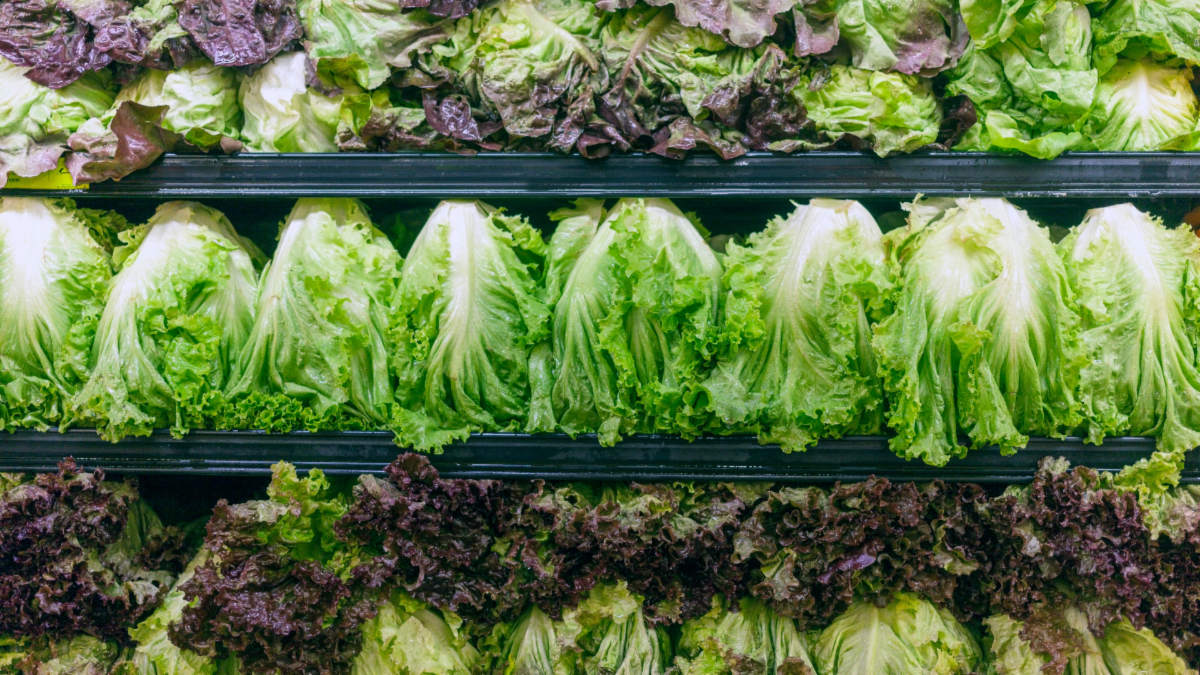
Federal investigators began tracing clusters of illnesses in July and eventually identified iceberg lettuce supplied by Taylor Farms as the source of the largest outbreak.
Taco Bell emerged as one of the common links among patients, and Taylor Farms recalled multiple lettuce products on July 17.
FDA records later showed the affected lettuce also moved through other restaurants and retailers, including KFC, Pizza Hut, and Walmart.
That’s what makes fresh-produce investigations so difficult. By the time health officials identify a pattern, the product has already moved through growers, processors, distributors, restaurants, retailers, and consumers.
The CDC says its case counts can lag by roughly six weeks because of the testing and reporting process, which is not ideal when the product being investigated has a shelf life measured in days.
Case closed?
The CDC declared the lettuce outbreak over on Sept. 11 after new infections linked to it declined significantly.
The contaminated lettuce is no longer available in stores or restaurants, but the broader story isn’t finished.
Federal officials are still investigating at least five other cyclosporiasis outbreaks, and the sources of those clusters have not been publicly identified.
Thousands of additional cases are also still awaiting laboratory confirmation, meaning the official count could continue rising even though the largest outbreak is considered over.


We’re now posting freight on the Trusted Freight Exchange (TFX), a secure, Highway-powered network made for verified carriers like you.
It’s built right into Highway, free to use, and designed to connect you with quality freight fast.
Every KCH load on TFX is:
With TFX, you skip the back-and-forth and get straight to hauling.

The U.S. has 23 million truck parking spots. You should be able to find one without feeling like you’re on a wild goose chase.
We’re teaming up with Truck Parking Club to make that happen.
Use code KCH25 for $25 off your next reservation.
Less wandering. More rest.
Designed for shippers who want straightforward market insight and smarter freight strategies.