
Good morning, and welcome to The Ship Show!
College football returns next week, which means it’s time for preseason rankings, playoff predictions, Heisman odds, and dozens of other things we’ll confidently say now and pretend we never said by October.
But forget the AP Poll. I’ve done some research, and today we’re previewing the category that actually matters: the best names in college football.
Not the best players. Names.
The 2026 roster includes:
I have no idea who’s winning the national championship. I don’t know who’ll win the Heisman, and I won’t pretend to know which 19-year-old quarterback is currently worth a $6 million NIL deal.
But I do know this. If the College Football Playoff were decided entirely by names, King Large is going undefeated.
– Greyson Harris
In this week’s issue:
The Freight Market Is Cooling, but the Floor Is Holding
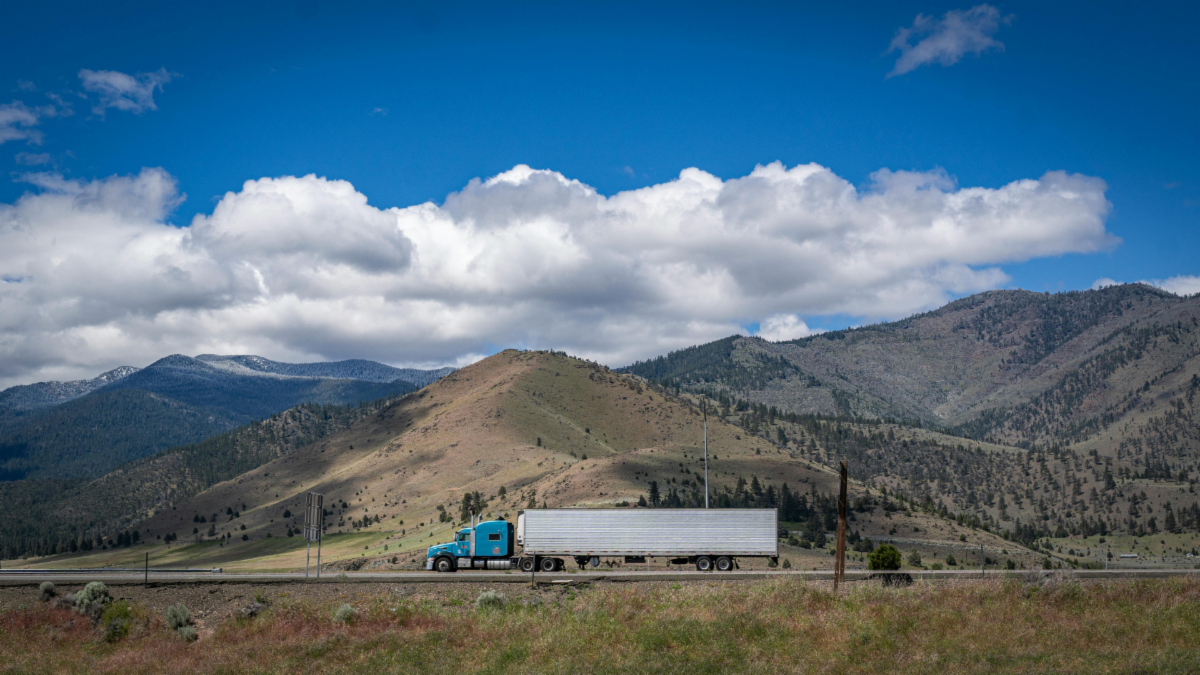
The freight market finally took its foot off the gas in August. Unfortunately for shippers hoping that means cheap capacity is coming back, the trucks appear to have missed that memo.
After a frantic June pushed tender volumes 15.8% above last year and sent rejection rates to 17%, activity has steadily cooled. Tendered volume is now running roughly 6% above last year, rejections have slipped below 14%, and dry van volumes are essentially flat year over year.
Normally, that would sound like the beginning of some welcome relief, but transportation capacity somehow got even tighter while all of this was happening. Welcome back to freight, where nothing is ever allowed to be simple.
Our local freight nerds break it down in this month’s KCH Freight Market Update.
Summer fling.
June was unusually strong because several freight cycles landed at once.
Ports were moving imports inland. Manufacturers and wholesalers were building inventories. Retailers pulled holiday merchandise forward. Meanwhile, normal summer consumer demand was reaching its seasonal peak. That combination pushed tendered volume 15.8% above last year and sent rejection rates to 17%.
Like most summer flings, it didn’t last long.
Retail inventory levels plunged from 66.0 in June to 46.3 in July, indicating contraction, while upstream inventory among manufacturers and wholesalers barely moved at 59.0. In other words, retailers largely stopped pulling while a bunch of merchandise remained parked farther up the supply chain.
July still brought 2.5 million TEUs into U.S. ports, the fourth-highest July on record. So the freight didn’t disappear. A lot of it simply made it into the country, reached wholesale and distribution networks, and then decided that was far enough for now.
Same invoice, different charges.
The slowdown has already reached pricing. Van spot linehaul fell from $2.38 per mile in July to $2.32 in August, putting spot back below contract rates, which currently sit around $2.38.
Contract pricing has also started showing signs of cooling. Contract linehaul declined one cent in August, its first monthly decrease of the year.
But that’s only half the invoice.
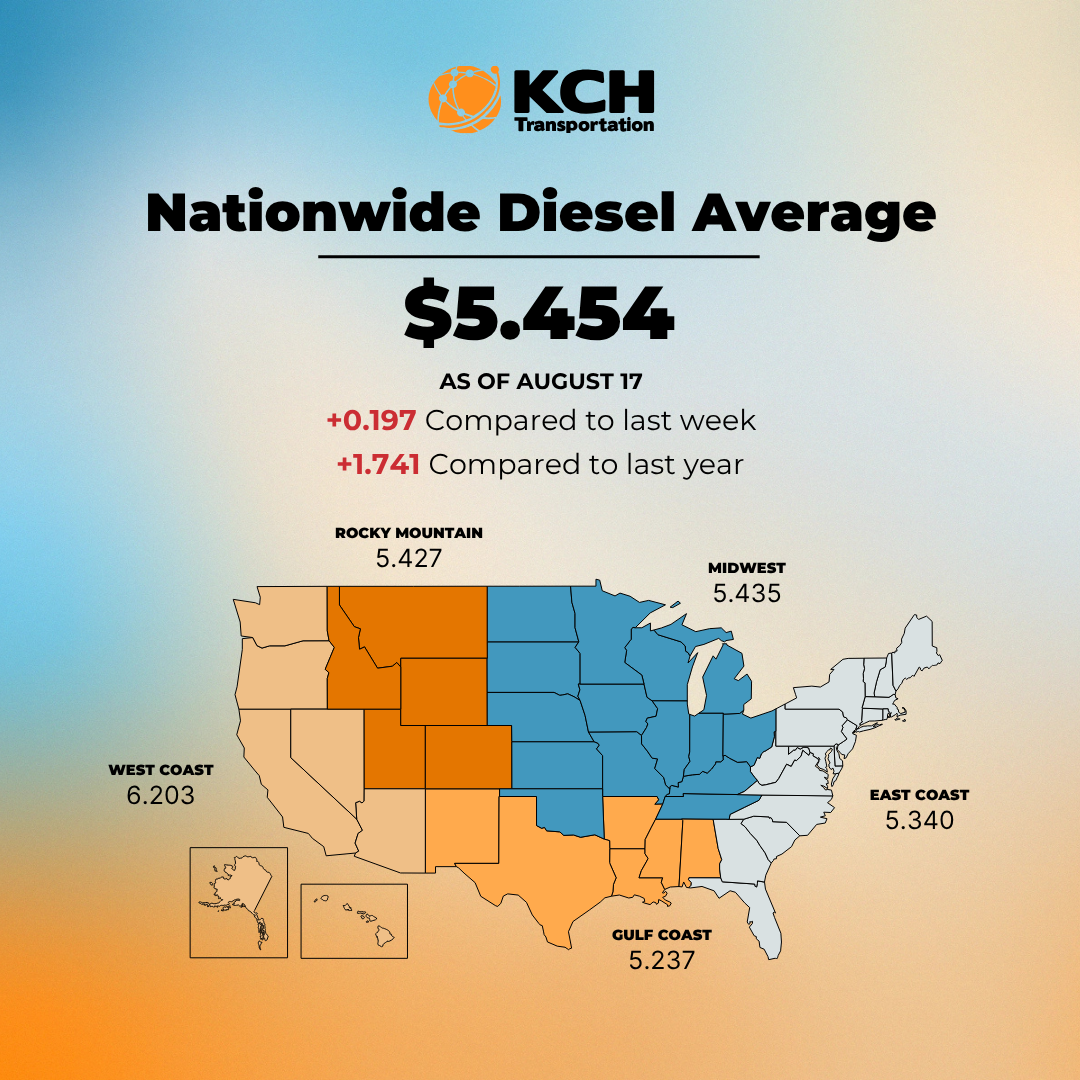
Diesel climbed to $5.348 per gallon, roughly $1.55 higher than a year ago. Between July and August, the fuel component increased by six cents per mile, exactly offsetting the six-cent decline in spot linehaul.
Spot linehaul fell. Fuel rose. The all-in spot rate remained parked at $3.00 per mile for a third consecutive month. It’s like getting a raise and immediately purchasing a more expensive home.
Missing: capacity.
Normally, weakening rates and lower rejection levels would suggest additional trucks entering the market. Not this time.
Transportation capacity in the Logistics Managers’ Index fell from 30.8 to 28.4 even as rejection rates declined from 17% to roughly 14%. Upstream capacity was tighter still, registering 26.6.
Truck transportation employment isn’t showing much growth either. July employment was essentially unchanged from February and remains approximately 123,000 jobs below the industry’s 2022 peak.
Capacity removed during the freight recession hasn’t suddenly returned just because rates improved, and there’s a reason.
The estimated non-fuel cost of operating a truck is around $1.78 per mile for larger fleets and closer to $2.00 for smaller self-financed operators. During the downturn, spot linehaul spent 23 of the previous 56 months below the large-fleet cost floor and 38 months below the small-operator floor.
Contract rates, meanwhile, never fell below either.
Today’s $2.32 spot linehaul provides them with margin again, but one profitable summer isn’t necessarily enough to convince someone to dust off a truck, find a driver, reactivate an authority, and pretend the last three years never happened.
Fall forecast.
That brings us to the next question: was July the peak, or just halftime?
Holiday inventory remains upstream and still needs to move toward retail networks. Containers that arrived during the summer have to work their way inland. And, of course, truckload freight typically gets longer heading into September as the market shifts from shorter port and local moves toward interior distribution.
There’s also CVSA’s Brake Safety Week from Aug. 23-29. The previous three events lifted rejection rates between 7% and 10%.
Rail will absorb some of the pressure. Domestic rail container volume is up 9.1%, and the share of truckload freight moving to intermodal has doubled. But rail doesn’t solve everything.
Very short freight has plenty of regional capacity. Very long freight can increasingly escape to intermodal. The more awkward middle distances are harder to cover, too long for many local fleets, and too short for rail to make sense.
Naturally, that’s also where much of the fall freight rotation shows up.
The floor matters more than the ceiling.
None of this guarantees another dramatic rate surge.
Manufacturing improved during July, including stronger backlogs and the first expansion in manufacturing employment in 33 months. But some headline strength came from slower supplier deliveries tied to Middle East disruptions rather than purely stronger demand.
Consumers also remain the biggest wildcard. The savings rate has fallen to 2.7%, spending recently outpaced income, and higher prices continue to pressure household finances.
Those concerns could eventually determine how high freight rates can climb, but the economics underneath trucking have changed.
Fuel is significantly more expensive. Operating costs are higher. Thousands of carriers spent years losing money, and capacity has yet to meaningfully return.
For shippers, that means the recent decline in spot linehaul shouldn’t automatically be mistaken for a reopening of the cheap-rate buffet. Contract rates still have room to catch up, and fuel is swallowing much of the savings before they ever reach the invoice.
The ceiling remains debatable. The floor looks considerably harder to move.

Train robberies were supposed to remain safely in the realm of Western movies, somewhere between saloon shootouts and men inexplicably wearing six layers of clothing in the desert.
Instead, freight rail theft has made a very modern comeback.
Cargo theft from U.S. railroads has quadrupled from pre-pandemic levels, with criminal groups increasingly targeting trains around major urban hubs such as Chicago, Los Angeles, and Memphis. In 2025 alone, thieves stole more than $200 million worth of goods in roughly 75,000 incidents across U.S. freight rail networks.
C’mon ride the train.
Rail theft surged during the pandemic as organized criminal groups adapted to changing supply chains.
Drug trafficking became more difficult during lockdowns just as Americans began ordering significantly more physical goods. Criminal organizations followed the merchandise, turning freight networks into increasingly attractive targets.
And trains offer a few advantages if your business model happens to involve stealing other people’s stuff.
Modern freight trains can stretch nearly three miles and often operate with only two crew members. They also follow predictable routes and frequently slow or stop while approaching major yards, giving thieves time to break into containers and unload merchandise into waiting vehicles.
Smaller, expensive goods are usually the preferred targets, including electronics, luxury clothing, alcohol, tools, sneakers, and automobile tires. Stolen products can then be sold directly, moved through independent businesses, or quietly introduced to the magical ecosystem known as the internet.
For anyone looking for their Nike order…
Most incidents look less like Jesse James holding a conductor at gunpoint and more like an extremely organized warehouse burglary.
In Chicago, thieves have repeatedly swarmed stopped Union Pacific trains, unloading televisions and other electronics into waiting vehicles. During one 2024 incident, the operation reportedly continued even after police arrived, which suggests everyone involved had become extremely comfortable with the process.
Thieves have occasionally tried stealing vehicles directly from railcars too, only to discover that cars are considerably harder to casually toss over the side of a train.
Fortifying the rails.
Rail carriers have responded by spending heavily on security.
CSX has also altered train schedules to reduce the amount of time railcars sit idle in high-risk areas. The company says those efforts have helped cut rail theft in the Memphis region by 80% year over year.
Meanwhile, at the Legion of Doom…
Unfortunately, organized theft groups have adapted alongside the railroads.
Some have switched from cellphones to walkie-talkies to make communications more difficult to track. Others are targeting trains farther from city centers or changing where they stage thefts. More sophisticated operations have allegedly gone further by sabotaging tracks or cutting brake lines to force trains to stop in remote locations.
CSX has even encountered thieves jumping from bridges onto moving trains when they slow through restricted-speed zones, and, honestly, I’d be too impressed to stop them.
When in doubt, call Congress.
One frustration for railroads and investigators is that punishment for cargo theft can remain relatively minor unless suspects use weapons or violence. Simple theft cases can also struggle for prosecutorial attention in cities where violent crime understandably takes priority.
The industry has pushed Congress for stronger federal tools, and the House passed the Combating Organized Retail Crime Act with bipartisan support in May.
Among other measures, the legislation would allow authorities to aggregate theft values when pursuing charges, expand criminal forfeiture and money-laundering statutes, and create a Department of Homeland Security group tasked with coordinating enforcement efforts.
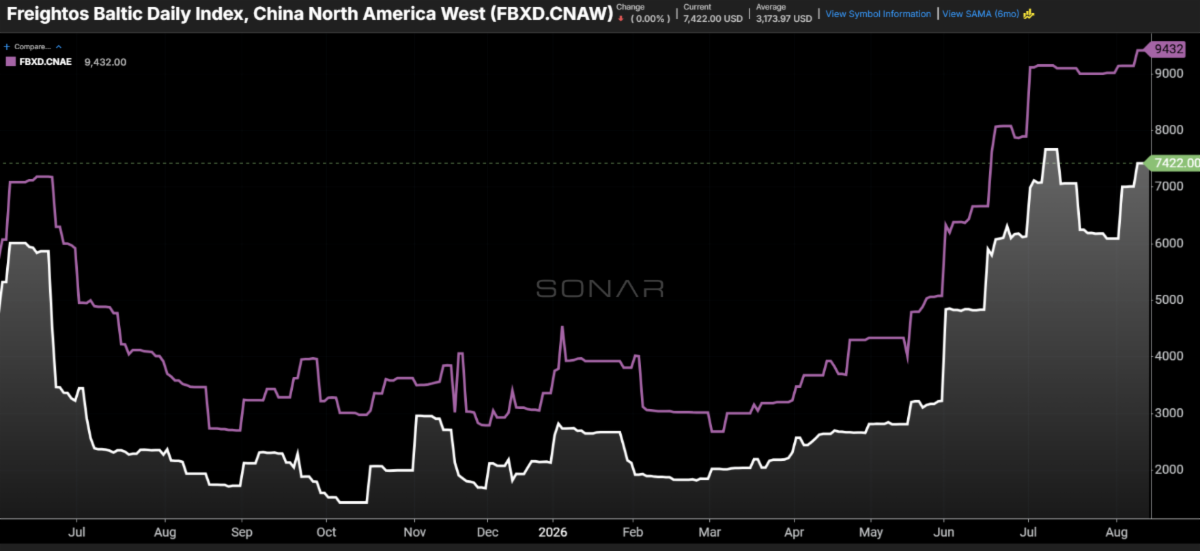
🚢 China-U.S. ocean rates climb again: Spot rates from China to both U.S. coasts have rebounded after falling through much of July, with East Coast rates up about $413 and West Coast rates up $1,328 since month-end. Demand doesn’t appear to be the main culprit, as China-to-U.S. bookings were down 4% year over year in early August while rates remained sharply elevated. Import demand is still expected to ease later this year, but longer-lead booking data suggests another smaller bump could arrive before peak season fully winds down.
🚂 Intermodal keeps U.S. rail traffic growing: U.S. railroads moved 526,410 carloads and intermodal units in the week ending Aug. 1, up 2.4% year over year. Intermodal volume climbed 4.8% while carloads slipped 0.4%, with metallic ores and metals, petroleum products, and farm products posting the strongest commodity gains. Through the first 30 weeks of 2026, total U.S. rail traffic remained 3.3% ahead of last year.
🇲🇽 Mexico remains the top U.S. trading partner: U.S.-Mexico trade totaled $89.2 billion in June, keeping Mexico ahead of Canada and China as the country’s largest trading partner. Laredo, Texas, remained the nation’s busiest international trade gateway with $36.5 billion in commerce, accounting for more than one-third of all U.S.-Mexico trade during the month.
💰 Trump pauses 50% tariffs on Canadian imports: President Donald Trump delayed a new 50% tariff on roughly $20 billion worth of Canadian goods just hours before it was set to take effect, saying the U.S. and Canada have reached a deal pending final paperwork. The duties, targeting products including hockey sticks, wine, and other consumer goods, were announced under the rarely used Section 338 of the Tariff Act of 1930 following complaints over Canadian trade practices. Trump also suggested the agreement could revive the long-dormant Keystone XL pipeline, while Canadian businesses that had been bracing for the tariffs now get a temporary reprieve.

For decades, parents have warned their kids that playing video games all day would never lead to a real career.
The Federal Aviation Administration would beg to differ.
The FAA has hired more than 2,000 new air traffic controllers after launching an aggressive recruitment campaign this spring aimed partly at younger applicants with gaming backgrounds.
Transportation Secretary Sean Duffy says the agency has already reached 94% of its hiring goal, with another 2,000-plus candidates moving through the pipeline.
We’re gonna need more Mtn. Dew and Doritos.
The FAA launched its gaming-focused recruitment push in April as part of a broader effort to address the country’s longstanding shortage of air traffic controllers.
The agency argues that many of the skills developed through gaming translate surprisingly well to an air traffic control tower, including spatial awareness, multitasking, strategy, problem-solving, and rapid decision-making.
Former controllers have also told the FAA that gaming helped them develop the ability to stay focused while processing several streams of information simultaneously.
Which makes sense, even if the stakes are slightly higher when the blinking objects on the screen contain 180 passengers. But the general principle carries over.
Gamers wanted.
Controllers help manage more than 80,000 flights each day, making quick decisions about takeoffs, landings, routing, weather, and aircraft spacing. Staffing shortages have increasingly raised concerns about overtime, fatigue, delays, and cancellations across the aviation system.
The FAA’s thinking is that widening the recruiting net could introduce the career to people who otherwise might never have considered it.
About one-quarter of current air traffic controllers hold a traditional college degree, according to the agency, meaning the career already follows a somewhat different path than many other high-paying professions.
Don’t quit your streaming gig just yet.
There is, naturally, a little more involved than being good at Call of Duty.
Applicants must be U.S. citizens, generally be younger than 31 when they apply, and be able to speak English clearly and fluently. They also have to pass the FAA’s Air Traffic Skills Assessment, along with medical examinations, security clearances, and other screening requirements.
Candidates who make it through attend the FAA Academy in Oklahoma City before moving on to additional on-the-job training. Only after completing that process do they become certified professional controllers.
Gaming experience may provide useful skills, but former FAA officials caution that it doesn’t substitute for the aptitude, discipline, and judgment required to manage actual aircraft.
In other words, yelling “lag” when something goes wrong is unlikely to make it into the official training manual.
More V-Bucks.
There is also a pretty compelling recruiting tool beyond telling gamers their parents were wrong: money.
The median annual wage for air traffic controllers was $144,580 in 2024, according to federal data cited by CBS News, putting the career comfortably into six-figure territory without necessarily requiring a traditional four-year college degree.
The FAA has also worked to make getting hired considerably less painful. The agency says it has cut more than five months from the overall hiring timeline and moved applicants into academy training four times faster last year as it attempts to rebuild staffing levels.
Not a great sign for anyone planning on flying in the near future, but it’s great news for the people who wish to be the ones controlling those flights.
And for an agency trying to convince 20-somethings to consider a federal career, reducing the amount of time spent waiting for the federal government to process paperwork is probably a decent place to start.

I have a complicated relationship with live-action X-Men movies. I have been hurt before.
I watched X-Men: The Last Stand. I endured X-Men Origins: Wolverine. I cringed through Apocalypse. I paid actual United States currency to see Dark Phoenix in a movie theater. Logan is the only legitimately great live-action X-Men movie, and I will be accepting no further questions at this time.
And yet, because apparently I have learned nothing, I am once again allowing myself to believe.
Marvel Studios officially unveiled the first cast for its new X-Men movie at D23 last week, finally putting faces to the MCU’s version of the mutant team. Thunderbolts* director Jake Schreier is directing (already off to a horrendous start), with Lee Sung Jin and Joanna Calo working on the script, and the movie is scheduled for May 5, 2028.
Previously, on X-Men…
To be clear, I’m not asking for much here. I am a gigantic X-Men fan who has spent most of his life wondering why one of Marvel’s greatest collections of characters has been so difficult to consistently translate into live action.
For years, Fox treated the source material like something it needed to apologize for.
And Wolverine increasingly became the center of everything. I love Wolverine. Everybody loves Wolverine. That’s part of the problem.
But taken as a whole, Fox had access to Cyclops, Storm, Jean Grey, Rogue, Gambit, Nightcrawler, Beast, Magneto, Mystique, Kitty Pryde, Colossus, Iceman, and about 14 warehouses full of incredible comic-book material and somehow spent most of two decades making The Wolverine Show Featuring Several People He Occasionally Works With.
Welcome to the X-Men. Hope you survive the experience.
Which brings us to the new class:
That last one feels almost unfairly appropriate. Mister Sinister is a theatrical, deeply unsettling geneticist obsessed with manipulating mutant bloodlines, and Adam Driver already possesses the general energy of a man who could explain eugenics to you while making the room temperature drop six degrees.
The rest of the cast is younger and considerably less established than the Fox-era lineup, which could be a good thing. These actors aren’t stepping into the movie as bigger personalities than the characters they’re playing.
But there is one name on that list upon which I am placing an entirely reasonable and healthy amount of emotional pressure.
Sugah, we need to talk about Rogue.
Inde Navarrette, I am rooting for you. Please understand what you’re inheriting.
Rogue is my favorite superhero of all time, largely because I grew up with the version from “X-Men: The Animated Series.” She’s powerful enough to punch something through a building, confident enough to talk trash immediately afterward, emotionally complicated because she can’t safely touch the people she loves, and Southern enough that every sentence sounds approximately 30% more charming than it has any right to.
Then X-Men came out in 2000.
And look, Anna Paquin is a good actress. This isn’t on her. The movie turned her into a frightened 17-year-old runaway whose primary contribution to the climax was getting kidnapped so everyone else could rescue her.
The Fox version retained her ability to absorb powers and memories through touch, but never gave her the super strength and flight that helped make other versions of Rogue one of the team’s legitimate heavy hitters, and I’ll never forgive them for that.
So this is my formal request to Marvel and Inde Navarrette, who I’m sure are both avid Ship Show subscribers: Please let Rogue punch something extremely hard.
Give her the Southern accent. Give her the swagger. Give her the humor. And, most importantly, give her Gambit.
To me, my X-Men.
The movie isn’t scheduled to arrive until May 2028, so there is still plenty of time for me to become irrationally optimistic before Marvel finds an innovative new way to hurt me.
I don’t like this director (Thunderbolts* was one of the worst things my eyes have ever seen), but I have cautious optimism in this cast.
Above all else, I love these characters, and after watching “X-Men ’97” prove that these characters still absolutely work when somebody understands what makes them special, I am ready to believe again.
All I want is one great live-action X-Men movie. One. That’s it.
Let Cyclops lead the team. Let Storm command the weather. Let Jean scare everybody. Let Mister Sinister be a complete freak.
And if Rogue flies through a wall, punches something into another county, and drops one perfectly timed “sugah” afterward, I will forgive an astonishing amount.


We’re now posting freight on the Trusted Freight Exchange (TFX), a secure, Highway-powered network made for verified carriers like you.
It’s built right into Highway, free to use, and designed to connect you with quality freight fast.
Every KCH load on TFX is:
With TFX, you skip the back-and-forth and get straight to hauling.

The U.S. has 23 million truck parking spots. You should be able to find one without feeling like you’re on a wild goose chase.
We’re teaming up with Truck Parking Club to make that happen.
Use code KCH25 for $25 off your next reservation.
Less wandering. More rest.

Designed for shippers who want straightforward market insight and smarter freight strategies.