
Good morning, and welcome to The Ship Show!
Today is my 30th birthday.
It still doesn’t feel real that my age now starts with a “th-,” but apparently the government has the paperwork to prove it.
They say wisdom comes with age, and I’m disappointed to report that there may actually be some truth to that.
I spent most of my 20s assuming adults eventually reach a point where they know what they’re doing. Then I became one and discovered that everyone is essentially just winging it while carrying around varying levels of lower-back pain.
It feels like just yesterday I was standing outside a bar in downtown Athens, Georgia, praying my fake ID would work. It always did. They weren’t exactly running TSA down there.
Now I’m 30 years old, writing newsletters for a freight company.
Was that the plan? Absolutely not. And I think that’s kind of the point.
So, because it’s my birthday, I reserve the right to make another portion of this newsletter unnecessarily about myself.
I’ve decided to use the “In Other News” section for something slightly different this week.
Down there, you’ll find a longer, mildly self-indulgent essay about the things I learned in my 20s as a man who became qualified to give unsolicited wisdom approximately five minutes ago.
Consider it my gift to myself and your unfortunate obligation as a reader.
– Greyson Harris

Just when global shipping was beginning to settle into the comforting routine of only one major Middle Eastern chokepoint being severely disrupted, the Red Sea decided now was a perfect time to get more attention.
A Houthi attack on the Egyptian-owned cargo ship Tihamah in the Bab al-Mandeb Strait killed six people and injured 10 others Tuesday, marking the first reported deaths from a Houthi strike on commercial shipping since the Iran war began in February.
The attack comes as traffic through the nearby Strait of Hormuz remains heavily constrained, oil production across the Middle East remains curtailed, and energy markets continue to get tossed around like clothes in a dryer.
Attack on the Red Sea… again
According to Yemen’s government, the Houthis fired three ballistic missiles at the Tihamah near the Bab al-Mandeb Strait, sparking a fire and causing significant damage to the vessel.
Three Pakistani crew members and one Indonesian were killed in the initial attack. Yemeni officials said a second strike then hit the area after rescue personnel arrived, killing two members of the rescue force. Ten others were injured, including seven crew members.
The Houthis later said they had attacked a vessel carrying Saudi military equipment through Bab al-Mandeb, although they did not identify the ship by name. The Tihamah, meanwhile, is listed as Egyptian-owned and operated and had departed the Yemeni government-controlled port of Al Mokha days earlier.
The attack comes less than a month after the Houthis declared a maritime blockade against Saudi Arabia. As a result, traffic through Bab al-Mandeb has fallen sharply. Roughly 32 vessels per day passed through the strait last week, compared with about 50 before the latest Houthi blockade.
Overall Red Sea traffic remains more than 50% below levels seen before the group’s earlier campaign against commercial shipping began in 2023.
Pick your problem
Bab al-Mandeb isn’t operating in a vacuum. Roughly 1,500 miles to the east sits the Strait of Hormuz, where the war with Iran has already created one of the largest energy disruptions in recent memory.
Before the war, roughly 20 million barrels of oil and petroleum products moved through the waterway on a typical day. That system has been slightly less efficient since people started shooting at each other.
The U.S. Energy Information Administration now expects severe constraints on Hormuz shipping to persist through August, and says most regional oil production and trade patterns may not return to something resembling their prewar normal until early 2027.
Even then, EIA expects roughly 600,000 barrels per day of production to remain disrupted through the end of 2027.
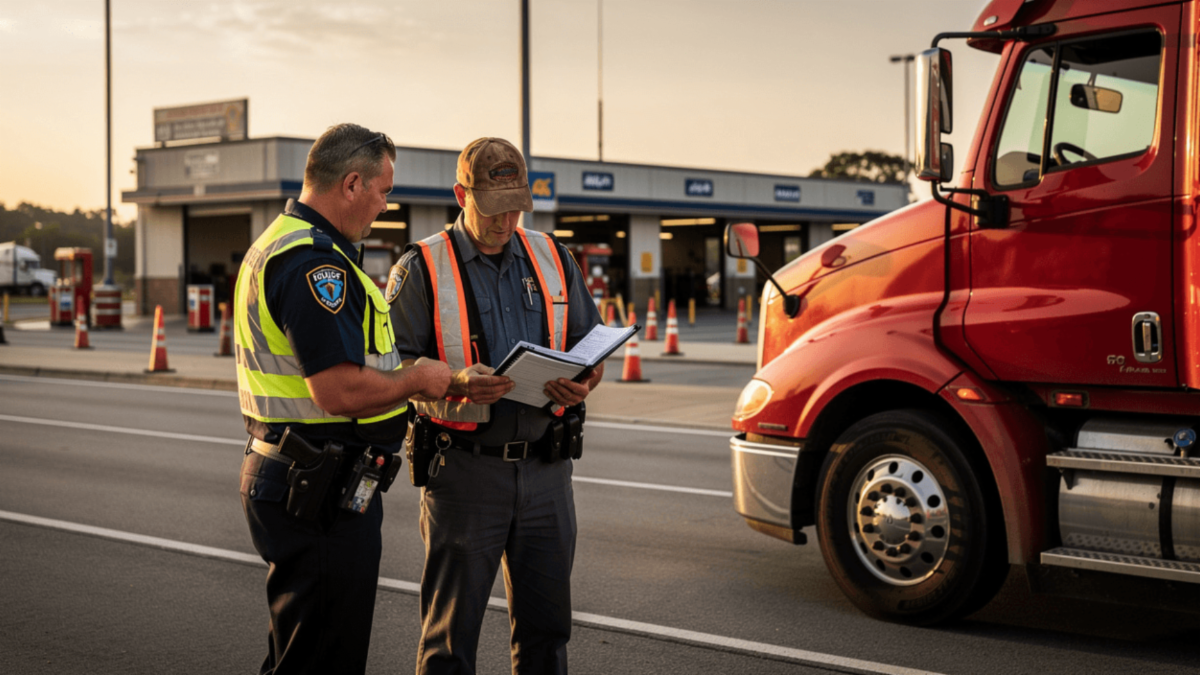
The Federal Motor Carrier Safety Administration is moving to make English-language proficiency enforcement a permanent part of federal trucking regulations, a change the agency estimates could put roughly 9,000 commercial drivers out of service each year.
Transportation Secretary Sean Duffy announced the proposed rule Aug. 7, saying FMCSA wants to codify the enforcement standards revived under the Trump administration and make them harder for future administrations to weaken or reverse.
The underlying requirement is hardly new. English-language proficiency standards for commercial drivers have existed since 1937.
What has changed over the years is how aggressively the federal government requires inspectors to enforce them.
From policy to permanence
In 2016, the Obama administration directed FMCSA inspectors not to automatically place drivers out of service solely for failing an English-proficiency screening. Drivers could instead receive administrative citations and continue operating.
The Trump administration reversed that approach last year, restoring stricter enforcement and requiring drivers who cannot sufficiently read or speak English or understand highway signs and signals to be placed out of service.
Since then, the Department of Transportation says more than 26,000 commercial drivers have been sidelined for English-language proficiency violations. Now, FMCSA wants to turn that enforcement policy into a formal regulation.
“Federal law is clear, drivers who can’t read or speak English — our national language — or understand road signs are unqualified to operate 80,000-pound big rigs on America’s highways,” Duffy said.
The proposal follows a petition from the Commercial Vehicle Safety Alliance and would formally incorporate existing FMCSA guidance and CVSA’s North American Standard Out-of-Service Criteria.
It would also create a single nationwide standard, so a driver who fails an English-proficiency evaluation would face the same basic enforcement consequences regardless of which state conducts the inspection.
A novel concept for federal trucking regulation: consistency.
The border could be a problem for obvious reasons
The proposal could have some of its biggest effects on cross-border trucking between Mexico and the U.S.
Under the rule, drivers operating beyond designated commercial border zones who fail an English-language evaluation would be placed out of service before traveling farther into the country.
Drivers operating only within those border zones would generally not be placed out of service unless inspectors determine they have operated, or intend to operate, in interstate commerce beyond the zone.
To enforce that distinction, FMCSA estimates roughly 100 federal inspectors and 1,900 state enforcement personnel working in U.S.-Mexico commercial zones would need additional training.
The agency says that training could be completed through a one-hour online course, because nothing says “airtight federal enforcement” quite like a one-hour webinar.
States aren’t waiting around
Several states have already moved independently to strengthen English-language requirements. Alabama, Iowa, South Dakota, Utah, and Wyoming have passed legislation this year allowing state or local law enforcement to enforce ELP standards.
Pennsylvania lawmakers are also considering legislation that would reinforce the federal requirement while tightening licensing and verification procedures.
The Houston-based Professional Trucking Association Group has also backed a standardized national requirement, saying consistent English-proficiency standards would improve safety, accountability, and fairness across the supply chain.
Next time, on Traffic Court…
FMCSA’s 35-page notice of proposed rulemaking has now been published in the Federal Register, opening the public comment period before the agency can issue a final rule.
If adopted, FMCSA estimates about 9,000 drivers could be placed out of service annually under the standard.
The bigger change, though, would be regulatory durability.
Instead of English-proficiency enforcement changing with agency guidance every time administrations swap offices, FMCSA wants the requirement written directly into federal regulations, making any future reversal a considerably heavier lift.
🚢 Trans-Pacific container rates climb as demand stays resilient: Asia-U.S. West Coast rates rose 11% to $6,826 per FEU in the latest Freightos Baltic Index, while East Coast rates increased 1% to $9,144, their highest level of the year. The rebound comes as import demand remains stronger than expected, prompting the National Retail Federation to revise its outlook from a sharp late-summer drop to more sustained elevated volumes through September.
🚂 Intermodal keeps U.S. rail traffic moving: U.S. rail traffic rose 2.4% year over year for the week ending Aug. 1, with intermodal volume up 4.8% as import activity and continued freight shifts from truckload helped drive gains. Carload traffic slipped 0.4%, though metallic ores and metals climbed 9.1% alongside stronger domestic steel production. Through the first 30 weeks of 2026, total U.S. rail volume is up 3.3%, with intermodal continuing to outpace carload growth. Across North America, combined rail traffic increased 2.5% for the week and 2.9% year to date.
✈️ Airfreight rates cool despite rising fuel costs: Global airfreight rates fell 8.8% in July from June even as jet fuel prices surged. Rates remained 16.8% above year-ago levels in late July, though that growth has slowed considerably from earlier in the year. Hong Kong-Europe rates dropped to $4.76 per kg from $5.45 in June, while Hong Kong-North America rates fell to $6.69 from $7.71. Softer e-commerce demand into Europe and shifting capacity also weighed on pricing, helping offset the impact of sharply higher fuel costs.
🌶️ Cocaine found hidden in truck hauling bell peppers: U.S. Customs and Border Protection officers in Laredo, Texas, discovered 37.69 pounds of cocaine hidden inside the tractor of a commercial truck carrying bell peppers through the World Trade Bridge. Two days later, officers at the Juarez-Lincoln Bridge seized another 50.37 pounds of cocaine from a passenger vehicle, bringing the combined haul to 88.06 pounds with an estimated street value of nearly $1.18 million.
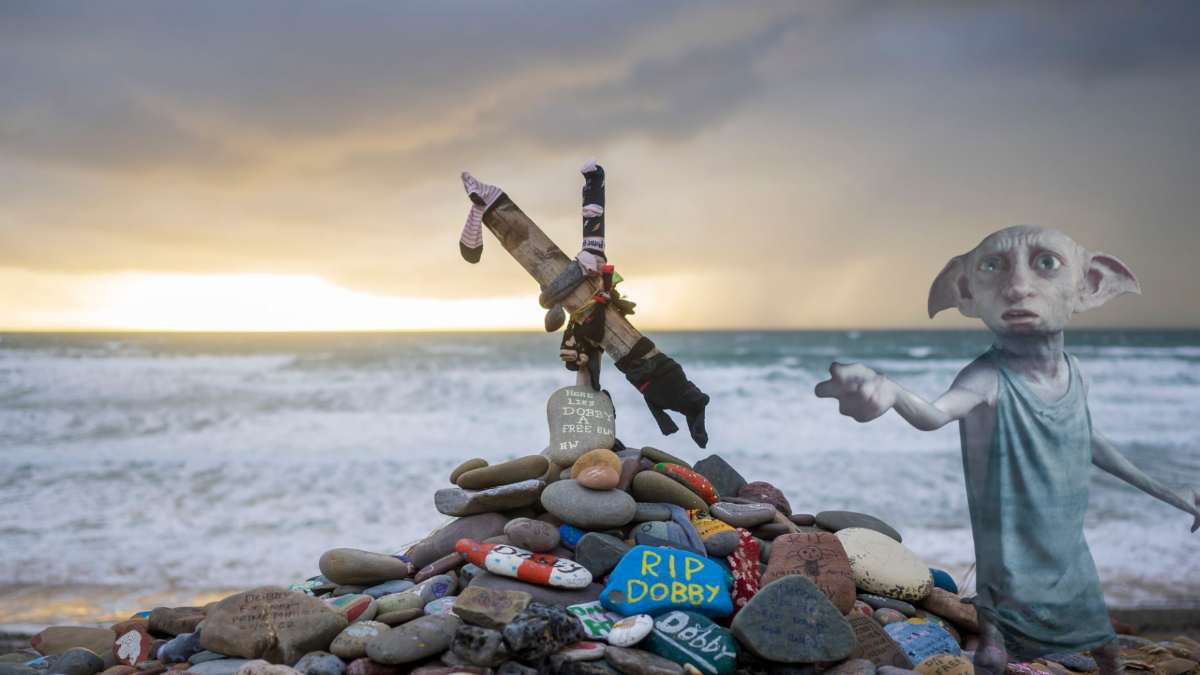
A massive energy project connecting the UK and Ireland has had to deal with permits, environmental concerns, engineering challenges, and one particularly sensitive issue: Dobby.
Yes, that Dobby.
The £430 million Greenlink interconnector was forced to change its route beneath a beach in Wales after Harry Potter fans complained that the cable would pass through the unofficial “grave” of the fictional house-elf from Harry Potter.
And before you ask, yes, there were actual ancient human remains nearby. Those were apparently easier to work around.
Here lies Dobby
Freshwater West beach in Pembrokeshire served as the filming location where Dobby was buried following his death in Deathly Hallows: Part 1. Fans have since turned the spot into an unofficial memorial, leaving painted stones bearing messages like “Here Lies Dobby.”
The National Trust, which owns the beach, has repeatedly asked visitors not to leave objects behind because Freshwater West is an environmentally sensitive site.
This has worked about as well as asking Harry Potter fans to behave normally around anything vaguely connected to Harry Potter.
The site remains a pilgrimage destination, complete with enough tribute stones to make one wonder whether Dobby had a much larger extended family than the books let on.
The Ministry of Magic was not consulted
Greenlink is a roughly 125-mile subsea electricity cable connecting the British and Irish power grids between Pembrokeshire and County Wexford. During a BBC interview, project manager Simon Ludlam pointed out where the cable would come ashore and travel underground at Freshwater West.
A couple weeks later, his phone started ringing.
“We got hundreds of calls, I mean, hundreds of calls,” Ludlam recalled on the Energy Revolution podcast.
A colleague eventually explained that the planned route was apparently going straight through Dobby’s grave.
Ludlam, who had somehow made it this far in life without being briefed on the geopolitics of Hogwarts, had one reasonable question: “Who is Dobby?”
After learning that Dobby was a fictional character buried in a fictional story at a real Welsh beach, Ludlam responded with roughly the level of confusion you might expect from an infrastructure executive suddenly being asked to negotiate with Potterheads.
His colleague assured him that, fictional or otherwise, the situation was “very, very serious.”
Dobby is a free elf
Eventually, Greenlink decided this probably wasn’t a hill worth dying on, especially since someone had already died there cinematically. The company brought planners back in and found a new route that avoided the memorial.
The cable project could finally proceed without accidentally triggering an international wizarding incident.
“A lot of people were very happy about that,” Ludlam said, adding that “Dobby’s happy.”
But wait, there’s more
There was one final wrinkle. While engineers went out of their way to avoid disturbing the burial site of a fictional elf, the revised project also passed near genuine Bronze Age remains, including urns associated with actual human burials.
Those were avoided too.
So in the end, Greenlink successfully routed a 125-mile international power cable around sensitive coastline, ancient archaeological remains, and the honorary grave of a computer-generated house-elf.

A massive energy project connecting the UK and Ireland has had to deal with permits, environmental concerns, engineering challenges, and one particularly sensitive issue: Dobby.
Yes, that Dobby.
The £430 million Greenlink interconnector was forced to change its route beneath a beach in Wales after Harry Potter fans complained that the cable would pass through the unofficial “grave” of the fictional house-elf from Harry Potter.
And before you ask, yes, there were actual ancient human remains nearby. Those were apparently easier to work around.
Here lies Dobby
Freshwater West beach in Pembrokeshire served as the filming location where Dobby was buried following his death in Deathly Hallows: Part 1. Fans have since turned the spot into an unofficial memorial, leaving painted stones bearing messages like “Here Lies Dobby.”
The National Trust, which owns the beach, has repeatedly asked visitors not to leave objects behind because Freshwater West is an environmentally sensitive site.
This has worked about as well as asking Harry Potter fans to behave normally around anything vaguely connected to Harry Potter.
The site remains a pilgrimage destination, complete with enough tribute stones to make one wonder whether Dobby had a much larger extended family than the books let on.
The Ministry of Magic was not consulted
Greenlink is a roughly 125-mile subsea electricity cable connecting the British and Irish power grids between Pembrokeshire and County Wexford. During a BBC interview, project manager Simon Ludlam pointed out where the cable would come ashore and travel underground at Freshwater West.
A couple weeks later, his phone started ringing.
“We got hundreds of calls, I mean, hundreds of calls,” Ludlam recalled on the Energy Revolution podcast.
A colleague eventually explained that the planned route was apparently going straight through Dobby’s grave.
Ludlam, who had somehow made it this far in life without being briefed on the geopolitics of Hogwarts, had one reasonable question: “Who is Dobby?”
After learning that Dobby was a fictional character buried in a fictional story at a real Welsh beach, Ludlam responded with roughly the level of confusion you might expect from an infrastructure executive suddenly being asked to negotiate with Potterheads.
His colleague assured him that, fictional or otherwise, the situation was “very, very serious.”
Dobby is a free elf
Eventually, Greenlink decided this probably wasn’t a hill worth dying on, especially since someone had already died there cinematically. The company brought planners back in and found a new route that avoided the memorial.
The cable project could finally proceed without accidentally triggering an international wizarding incident.
“A lot of people were very happy about that,” Ludlam said, adding that “Dobby’s happy.”
But wait, there’s more
There was one final wrinkle. While engineers went out of their way to avoid disturbing the burial site of a fictional elf, the revised project also passed near genuine Bronze Age remains, including urns associated with actual human burials.
Those were avoided too.
So in the end, Greenlink successfully routed a 125-mile international power cable around sensitive coastline, ancient archaeological remains, and the honorary grave of a computer-generated house-elf.

I should probably start with an important disclaimer: turning 30 does not suddenly make me qualified to give life advice. I’ve been 30 for about ten hours, and so far nobody has handed me a pipe, a rocking chair, and/or the answers to any of life’s larger questions.
Still, birthdays with a zero at the end have a nasty habit of making you reflective.
Looking back on my 20s, I realized I actually learned a few things along the way. Mostly because I ignored the lesson the first time and life was kind enough to keep assigning the same homework until I figured it out.
Some of these lessons came from great experiences. Others came from decisions I would prefer not to recreate for educational purposes. Together, they made my 20s messy, unpredictable, occasionally painful, frequently hilarious, and ultimately… not bad.
So, with the enormous authority granted to me by having survived exactly three decades, here are a few things I wish I could tell the version of myself who entered his 20s convinced he had everything more or less figured out.
You’re going to screw up. A lot. And that’s okay.
Not to alarm any younger readers, but you are going to make some spectacularly bad decisions.
Some will be harmless. You’ll stay out too late before work. Buy something stupid. Text someone you absolutely should not have texted.
Other mistakes will be bigger. You’ll make the wrong career move. Trust the wrong person. Hurt somebody. Disappoint yourself.
Occasionally you’ll create a situation so thoroughly unpleasant that you’ll sit there thinking, “Well. Surely this is the end of my life as I know it.”
And then, annoyingly, life keeps going. Some of the biggest (and best) changes in my life have happened immediately after something went horribly wrong.
When things are going well, it’s easy to get comfortable and convince yourself there’s no reason to change anything. Sometimes it takes a complete disaster to force you to look at your life differently.
But every new beginning starts with something else ending. Usually something you were convinced you couldn’t live without.
Turns out, you probably can.
Accountability is key.
This piggybacks off the last one because, again, you are absolutely going to mess up.
You will eventually do something you’re not proud of. Maybe several things. If you’re especially talented, you can even bundle them together.
What happens next is what truly matters.
Apologize when you’re wrong. Own what you did. Don’t spend all your energy explaining why it happened when you could be figuring out how to make sure it doesn’t happen again.
Then, actually change something.
At the same time, accountability does not mean building yourself a permanent home inside the worst thing you’ve ever done.
You’re capable of doing things you never thought you’d do. You’re also capable of learning from those things and becoming someone better because of them. Both things can be true.
Accountability shouldn’t be a life sentence. It should be a course correction.
Ideally, you learn that lesson without requiring too many dramatic plot developments, but some of us will inevitably take the scenic route.
You have way less control than you think.
Sometimes that’s terrifying. Sometimes it’s exactly what sets you free.
Journalism had been the plan basically my entire life. I had done everything correctly. I went to my dream school at the University of Georgia. I got my degree. I got a job working for a local news station.
Boom. Life figured out. One problem: I hated it. Turns out, some dreams look a lot better from the outside.
Eventually, I walked away from journalism and became a bartender, which at the time felt less like a career pivot and more like admitting I had absolutely no idea what I was doing.
But that bartending job introduced me to people who are still some of my best friends today. Later, because a couple of people from KCH happened to come into the bar on their lunch break, I ended up taking a job here.
Now I spend my week writing, creating videos, making graphics, and coming up with increasingly elaborate ways to make transportation news entertaining. Apparently there is a market for jokes about diesel fuel. Who knew?
None of that was part of the plan. And I wouldn’t change it.
There’s something freeing about eventually realizing that your life does not have to resemble the version you imagined at 19. Sometimes the plan falls apart because it was the wrong plan, and you just weren’t going to realize it until something forced you off the road.
Friendships take effort.
Making friends when you’re young is ridiculously easy. You go to school together. You live down the hall from each other. You’re both at the same party. Easy friendship.
Adult friendship requires logistics. People get married. They have kids. Their careers get demanding. Sometimes they move 20 minutes farther away and you begin speaking about them as if they emigrated overseas.
If you want to keep people in your life, you have to make an effort. Ask them to lunch. Go see a movie. Suggest the weekend plan. Send the text first. Be the person who actually puts something on the calendar instead of saying, “We should definitely hang out soon,” until one of you dies.
Don’t obsess over whether your circle is too small or whether you need more friends. Pay attention to the people who consistently show up, who make your life better, and who you genuinely enjoy being around.
Then show up for them, too.
Show some gratitude to the people who raised you.
One of the stranger parts of getting older is realizing that your parents were not, in fact, omniscient authority figures who had access to some secret adult handbook.
They were just people. People with jobs, bills, stress, relationships, problems, and a child they were somehow responsible for keeping alive. In my case, a sarcastic child with strong opinions on X-Men and Star Wars.
I don’t have kids, but the older I get, the more I appreciate the sacrifices that probably went completely unnoticed when I was younger.
So call them. Visit them. Tell them you appreciate them. They helped get you here.
Take care of your body.
One of the crueler parts of your 20s is that your body spends the first half convincing you there are no consequences.
You can sleep four hours, eat Taco Bell at midnight, drink something blue out of a plastic cup, and wake up the next morning ready to do it all again. For a while, you begin to believe you may actually be indestructible.
You are not. At some point, your body starts remembering everything, and it will remind you often.
Drink some water. Exercise. Get enough sleep. Wear sunscreen. Maybe eat a vegetable every now and then.
I’m certainly not suggesting you start waking up at 4:30 a.m. to plunge yourself into an ice bath while listening to a podcast about optimizing your testosterone. Just make an effort to take care of yourself before your body starts demanding it.
The annoying truth is that you’ll feel better if you take care of yourself, and the sooner you start, the easier it is. Your future body will appreciate it.
Or at the very least, it may allow you to sneeze without pulling something.
And finally, have fun.
This might be the most important one.
Your 20s can be stressful. You’re trying to build a career, manage money, date people, maintain friendships, and determine whether buying furniture from Facebook Marketplace is worth potentially being murdered.
Your 20’s are also one of the few stretches of life where you have an incredible amount of freedom and just enough stupidity to actually use it.
Take the trip you’ve been talking about. Go to the concert. Join the club. Move somewhere new. Get the pet. Try the hobby you might be terrible at. Spend the Saturday floating down a river instead of doing something productive. Say yes to your friends when you can, especially when the plan sounds slightly ridiculous.
There will always be reasons not to do something. Money, work, timing, responsibilities, knee pain, etc. At some point, some of those excuses become legitimate.
So while you have the opportunity, make memories. Nobody reaches 30 wishing they had spent more Saturdays answering emails.
Alright, grandpa, that’s enough for now.
I didn’t wake up this morning feeling dramatically wiser. I have not suddenly developed excellent financial instincts, an interest in property taxes, or the ability to understand why people willingly watch 60 Minutes.
I still don’t entirely know what I’m doing, and I’m beginning to suspect nobody ever does. Maybe you just get older, collect enough stories to recognize a few patterns, make better decisions slightly more often, and become increasingly aware that everyone else is figuring it out at the same time.
So I’m entering my 30s with a slightly different philosophy than the one I entered my 20s with. Make plans, but don’t become too attached to them. Own your mistakes, but don’t let them define you. Take care of the people who take care of you. Call your parents. Take care of your body. Do the fun thing when you have the chance.
And when life inevitably decides to completely rearrange everything, try to remember that sometimes the part you never planned for ends up being the best part.



We’re now posting freight on the Trusted Freight Exchange (TFX), a secure, Highway-powered network made for verified carriers like you.
It’s built right into Highway, free to use, and designed to connect you with quality freight fast.
Every KCH load on TFX is:
With TFX, you skip the back-and-forth and get straight to hauling.

The U.S. has 23 million truck parking spots. You should be able to find one without feeling like you’re on a wild goose chase.
We’re teaming up with Truck Parking Club to make that happen.
Use code KCH25 for $25 off your next reservation.
Less wandering. More rest.

Designed for shippers who want straightforward market insight and smarter freight strategies.