

The global logistics landscape is rapidly evolving, and drayage services are gaining prominence. According to a recent Technavio report, the global drayage services market is projected to grow from 2025 to 2029, reaching USD 2.46 billion at an annual compound growth rate of 1.8%. A dynamic mix of manufacturing growth, surging e-commerce activity, and ground-breaking adoption of AI fuel this growth.
Why drayage matters more than ever
Drayage services are a crucial component of intermodal freight transport, enabling the short-distance shipping of cargo containers from ports, warehouses, and rail terminals. As distribution models evolve, several businesses find themselves adopting modern shipping alternatives, making swift adjustments to meet customers’ needs. The significance of drayage shipping lies in mitigating port congestion, ensuring last-mile delivery efficiency, and facilitating the smooth operation of the supply chain.
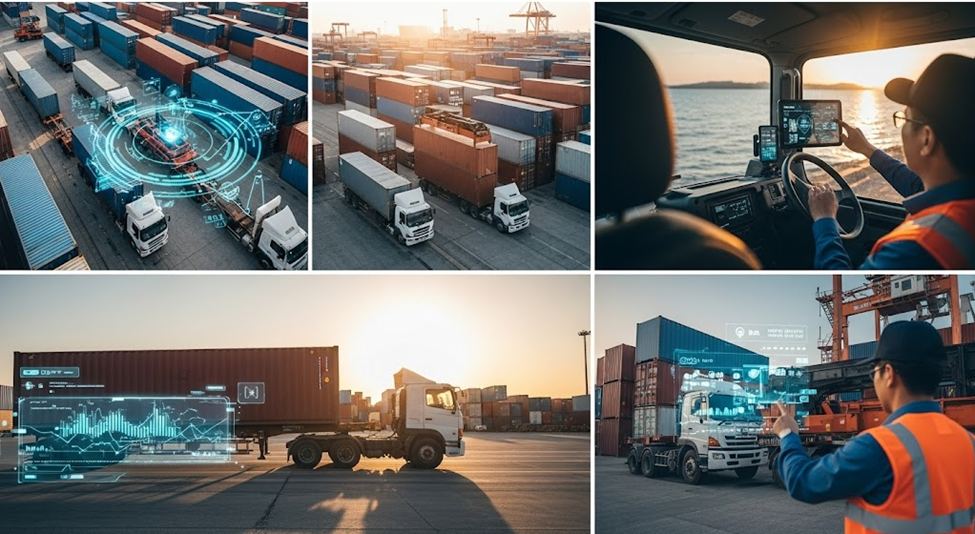
With the rise in online shopping and increasing urbanization, it has become essential to deliver just-in-time visibility and route optimization to drayage operators. In countries in the Pacific Asia region where growth is rapid, drayage companies are now leveraging digital platforms, along with GPS and telematics, to optimize their operations for on-time deliveries.
AI: The future of drayage logistics
When it comes to the drayage freight industry, the advent of Artificial intelligence is changing the game. Technologies such as real-time route optimization, maritime repositioning, predictive maintenance, automation, and scheduling are so far so efficient that they have enhanced logistics conveniently. Again, tools such as blockchain technology and autonomous cars are likely to change the way goods are transported from one place to another.
The impact of Artificial Intelligence goes beyond two-dimensional automation. Different companies can utilize AI applications to adapt to fluctuating trade volumes and port closures, as well as meet stricter emissions standards. These developments have gained importance due to the ever-increasing complexities in the global supply chain and rising customer expectations.
Challenges loom—especially the labor shortage
Despite optimistic growth projections, the market has some serious threats in store for it. For one, a persisting shortage of skilled drayage drivers continues to pose a nightmare scenario. The salaries tend to be low, the hours long, and with ELD regulations becoming stricter by the day, finding and keeping drivers has become a challenging task. Operational efficiency is a matter of thoughtful planning and investment in workforce development, as infrastructure bottlenecks and urban traffic congestion are among the key factors that affect it.
Key Market Segments and Trends
The report segments the market by end-user (electronics, food and beverage, consumer goods), by type (inter-carrier, expedited, pier drayage), and by region (APAC, North America, Europe, Middle East, South America). On the other hand, the electronics and electrical segment fulfills the demand at the highest level due to increased manufacturing and eco-based production practices in nations like China.
Looking ahead
Drayage services should evolve as the global economy continues to become increasingly digitized. The ability to lead the market in the future will belong to companies that invest in AI, automation, and a skilled workforce. Whether optimizing the movement of goods across busy ports or integrating blockchain technology to provide transparency, innovation will play a central role in addressing both growth and complexity in the years to come.