
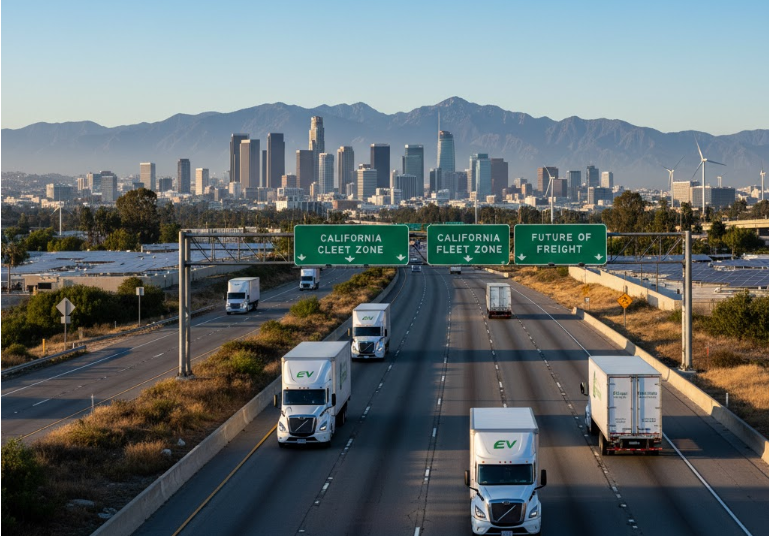
The ACF regulations for California had one purpose only — to transform freight trucking in the state into a sustainable, environmentally friendly domain — and soon enough, they faced a major hurdle.
CARB (California Air Resources Board) has canceled several key provisions of the regulation and will keep only the smallest obligations for public fleets. This ruling has consequences not only for drayage services but also for the entire U.S. freight industry.
The Development of the Advanced Clean Fleets Standard
The ACF was a regulatory attempt designed from the ground up to ensure the quickest possible ZEV deployment in the California truck sector. It was a law requiring that, by 2040-2045, any trucking company operating in the state use only all-electric vehicles. The deadlines varied by vehicle type, e.g., box trucks and Class 8 sleeper cabs.
At the same time, court cases and regulatory difficulties slowed the process. At first, CARB contended that the ACF case did not qualify for the Environmental Protection Agency (EPA) waiver. However, after industry groups raised concerns and the California Trucking Association filed a lawsuit, CARB sought a waiver, which remained pending for more than a year. The political upheaval and delay ultimately led to a reduction in the legislation’s core provisions.
Key Changes and Withdrawals
The canceled parts are the High-Priority Fleets and drayage rules. The High-Priority Fleets rule applied to companies with a fleet of more than 50 vehicles and specified a ZEV purchase schedule for trucks and tractors, aiming to have all trucks by 2035 and 2042.
The drayage rules envisioned for 2024 mandated that all newly registered drayage trucks in California would be zero-emission, with the gradual phasing out of older models. The abandonment of the regulations implies that ZEV mandates will have little effect on drayage transportation and shipments in California for now.
Remaining Provisions and Flexibility
CARB has revised its rules so they apply only to state and local government fleets, with compliance deadlines extended by 3 years. Private operators are not affected at all. A casual measure, but still giving the public sector some room to maneuver.
The increase in ZEV adoption in California has not been affected by the rollback. The state reported sales of over 131,500 ZEV trucks in 2024, accounting for 22.8% of total truck sales—a remarkable increase compared to last year’s sales. Thus, it can be concluded that acceptance of zero-emission trucks in the market is increasing and is not dependent on strict mandates.
Implications for the Freight Industry
Trucking businesses, particularly those that handle drayage, will immediately benefit and gain more operational space by removing these rules. Nevertheless, the transition to a less polluting freight sector is also being delayed, which could be an environmental drawback in one of the USA’s largest trucking markets. California’s fleet operators must monitor regulatory developments closely, as future changes could affect their investment and compliance strategies.
End Note
The cancellation of California’s clean-fleet regulations is indicative of a changing environmental policy in freight transport. The ZEV requirement for heavy-duty and drayage fleets is no longer in effect, but public-sector obligations remain, which is slowing adoption.
Players in the drayage market will need to monitor developments closely and adjust their operations as needed. KCH Transportation offers reliable drayage services to ensure efficient, regulatory-compliant freight operations, even as regulations change.