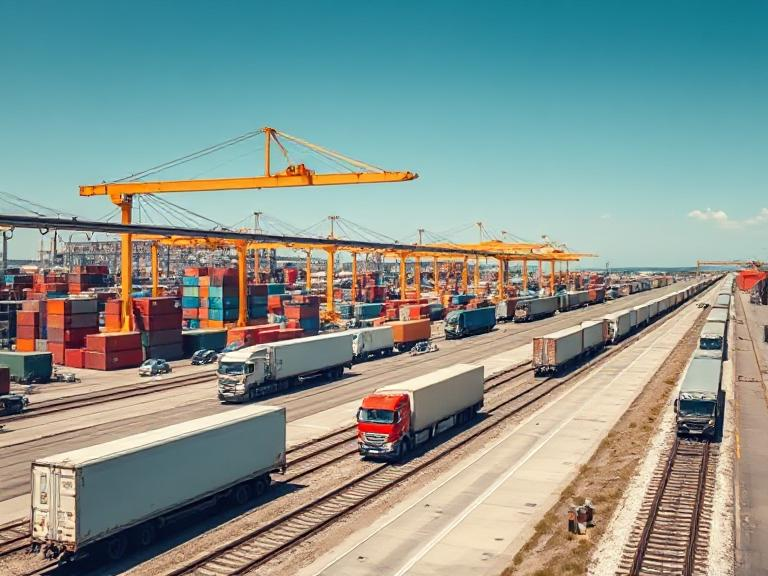
The supply chain in the USA is ever-changing to keep up with the needs of business and consumers. The intermodal shipping services, spurred on by increasing shipping costs, capacity issues, and the need to be sustainable, are looking up as they provide a more flexible and effective way of shaping deliveries than trucking.
One of the latest advancements is the creation of a new intermodal gateway intended to boost the connectivity separating the major markets across the USA.
Expanding Reach Through Rail and Truck Integration
This brand-new service creates bi-directional freight routes that serve major western and southern markets as the Midwest and beyond. Now that it is a rail-driven long-haul service complementing truck last-mile service, it is expected to provide truck-competitive transit times while alleviating highway congestion.
Shippers that carry weights of automotive, consumer goods, food and beverage products, and healthcare goods are the biggest beneficiaries. These industries extend reach through intermodal freight shipping, which provides a reliable mode of transport that is sufficiently fast, expandable, and not expensive.
Advantages of Intermodal Shipping Services
Intermodal shipping services offer a greater advantage compared to using one mode of transport. The multimodal transport allows organizational entities to:
- Improve Transit Times: Trucks can enter and exit intermodal terminals or rail yards smoothly and efficiently, speeding up truck movement and deliveries.
- Be Green: Moving long-haul freight from roads onto rail drastically cuts emissions, feeding into corporate green programs.
- Expand Market: Intermodal gateways bring land to underserved regions for companies to service new markets.
- Increase Reliability: Having less dependence on one mode of transport lessens downtime impact during events such as driver shortage or volatile fuel prices.
Strengthening Supply Chains with Intermodal Transportation Services
A notable advantage of intermodal transportation services is enhanced flexibility coupled with limited movement assistance. When there is port congestion and other weather or space-related hindrances, varying the mode used to deliver the cargo regardless of the initial route comes as a relief for shippers. This way, freight equilibrium is maintained even when the other modes are unavailable, which would be expensive.
Intermodal gateways in regional hubs such as Louisville are increasingly regarded as infrastructure developments benefiting nationwide logistics. The market exists for terminals with enhanced capacity and streamlined rail connections to allow for faster throughput and greater capacity for storage, while at the same time having a highly reliable scheduling system. These improvements facilitate the supply chains that balance speed and consistency.
Looking Ahead: A Smarter Future for Freight
As global trade is increasing and consumers want faster delivery, the importance of intermodal shipping services will become even more pronounced. Intermodal freight shipping is used for logistics by businesses because of flexibility, durability, and easier access to hard-to-access markets.
Conclusion
In the business world today, those who wish to remain relevant have no choice but to start utilizing intermodal transportation services. So, it’s time for organizations to find the KCH Transportation for needs that might be served best through intermodal transportation, leading to cost-efficient expansion of their supply chains even further.
Working with KCH Transportation will grant you the chance to learn how intermodal freight solutions can alter your logistics strategy.