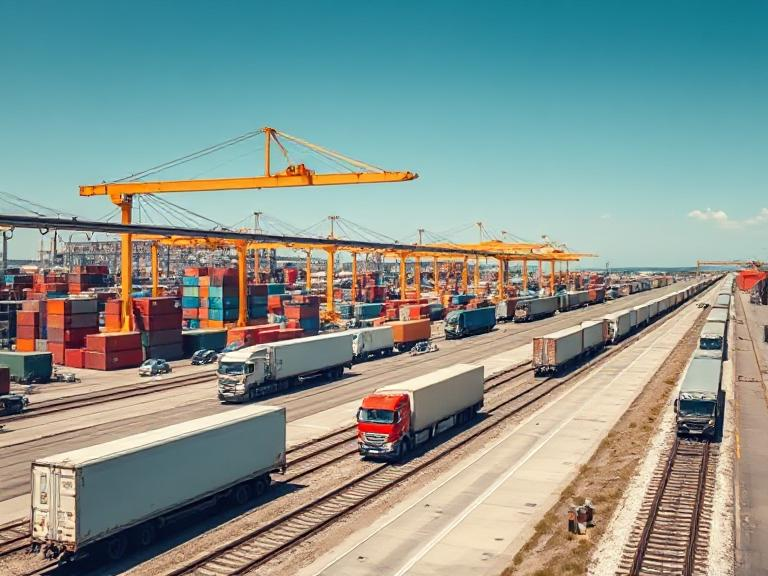
New Intermodal Gateway Boosts Market Access Across U.S. Supply Chains
The supply chain in the USA is ever-changing to keep up with the needs of business and consumers. The intermodal


The supply chain in the USA is ever-changing to keep up with the needs of business and consumers. The intermodal

In recent years, wildfires have been spreading across countries, causing extensive damage to communities and resulting in harmful environmental impacts. Additionally, logistics has been severely affected, with 75% of the global supply chain being altered by wildfires and El Niño phenomena.

Oversized freight shipping is necessary when goods are non-standard or too large to fit in standard containers, requiring specialized transport

Packaging accounts for over $150 billion in annual spending for manufacturers and shippers. It also contributes to 75% of greenhouse gas emissions from the supply chain. However, to alleviate environmental risks, many companies are investing in re-shoring factories, “just-incase” inventories, and qualifying alternative suppliers to build flexibility.
Transportation and the supply chain industry witnessed unprecedented challenges in 2023. From market shifts and bankruptcies to labor unrest and global trade partnerships, the year was marked by events that shaped the industry in more ways than one.

The global supply chain witnessed a tumultuous year in 2023, with significant changes across all modes of transportation. From inflation and labor issues to strategic cargo theft and environmental initiatives, the industry faced a complex landscape. For the outlook of 2024, understanding these key trends is paramount for navigating the future of logistics.

Fertilizers are essential in the agricultural industry and supply crucial nutrients to crops worldwide. The industry is expected to reach 9.7 billion by 2050, and fertilizer prices account for nearly one-fifth of the United States farm cash costs.

The housing market has been a crucial economic indicator for reflecting the nation’s financial health and influencing various sectors. Over the years, housing starts, or new residential constructions, have experienced fluctuations, from the booming 1960s to the 2008 recession.
The freight industry has undergone significant changes in the last couple of decades. Considering the recent closures in the sector, this has highlighted the vulnerability of many companies. Exploring the ebbs and flows unveils insights into how the economy has evolved in recent years, leading to multiple trucking companies closing.
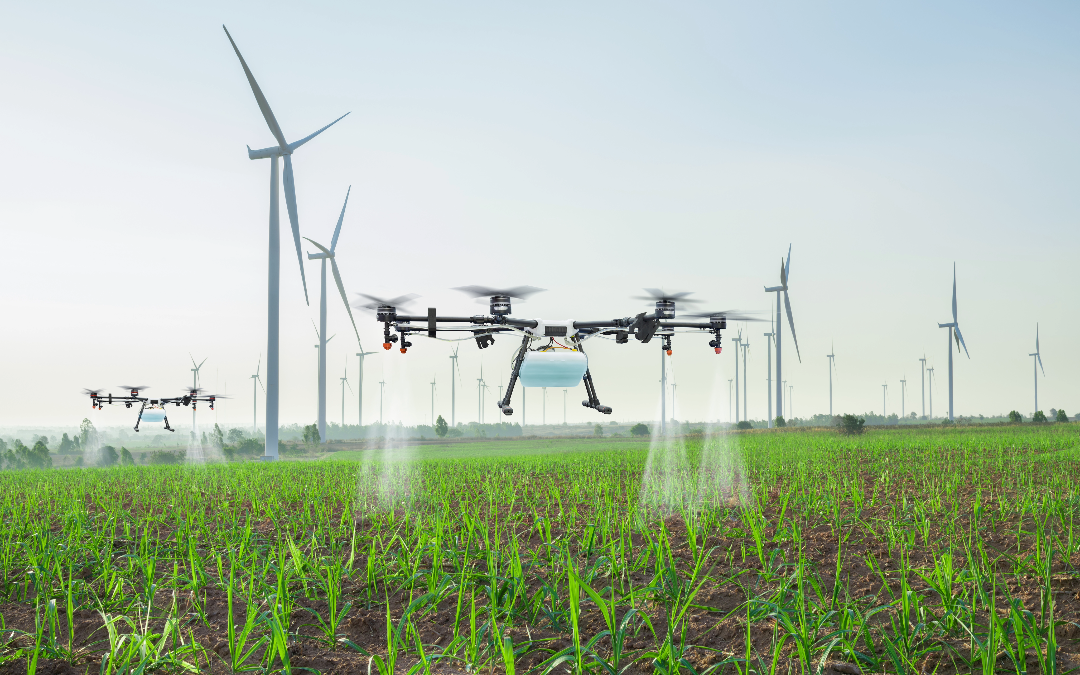
The agriculture industry is the backbone of our global economy, providing food, feed, fiber, and fuel for the world’s population. In recent years, the sector has seen significant transformations driven by technological advancements, environmental concerns, and changing consumer preferences.

Electric Vehicles (EVs) are continuing to evolve throughout the globe and in various industries. The number of electric vehicles used worldwide has increased significantly, from 1.3 million in 2015 to an estimated 40 million in 2023. The drive for the adoption of electric vehicles is environmental concerns, government policies, and overall consumer preferences.

Fall planting season is a pivotal moment for farmers across the United States. On average, the United States has over 2.05 million farms, and the agricultural industry profits around $183 billion in revenue.